Sunshine Blue Blueberry — Heat-Tolerant Semi-Dwarf, Fruits with Just 150 Chill Hours, Pet-Safe

$38.00

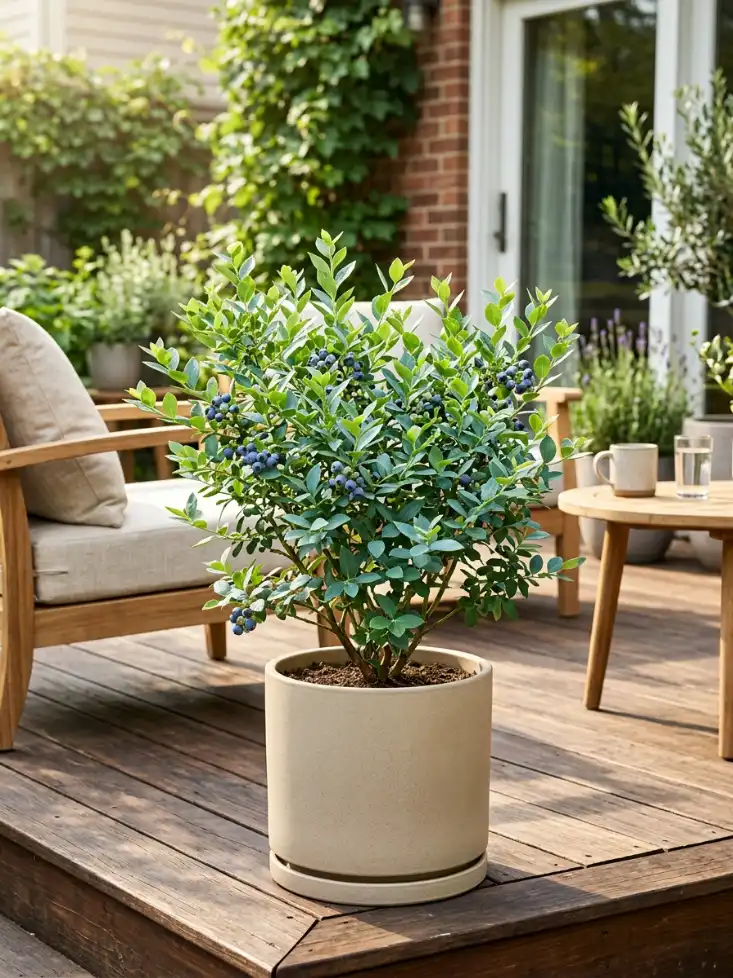
In 1979, a plant breeder in Florida looked at the blueberry — a fruit that stubbornly refused to grow anywhere warm — and decided to rewrite its DNA. The result was Sunshine Blue: the first truly heat-tolerant blueberry. It stays a tidy 3 to 4 feet, covers itself in pink-tinged blooms each spring, and produces 5 to 10 pounds of sweet-tart berries every summer. No winter chills required.

Full sun, 6–8 hrs Light Consistent; 1–2″/wk, daily in containers in summer Water 5–10 USDA Zones 3–4 ft tall and wide Mature Height
Alive Arrival Healthy on arrival, or we replace it
Free Shipping On orders $99+

The Blueberry That Beat the Heat

Here is a fact that surprises most people: the blueberry, for most of its domesticated history, was a cold-climate crop. The northern highbush varieties that fill supermarket clamshells need a long, hard winter — 800 to 1,000 hours below 45 degrees Fahrenheit — to reset their internal clocks and set fruit for the following summer. Gardeners in Atlanta, Houston, and Los Angeles were out of luck. You could grow the bush. You could not grow the berries.

Sunshine Blue changed that. Released in 1979 after years of breeding work that crossed northern highbush genetics with a heat-tolerant wild species from the Florida panhandle (Vaccinium darrowii), it was the first blueberry that reliably fruited with as few as 150 chill hours. That is not a typo. A traditional blueberry needs a thousand hours of winter cold. Sunshine Blue needs one hundred and fifty. It fruits in Orlando. It fruits in San Diego. It fruits in places where a January frost makes the evening news.

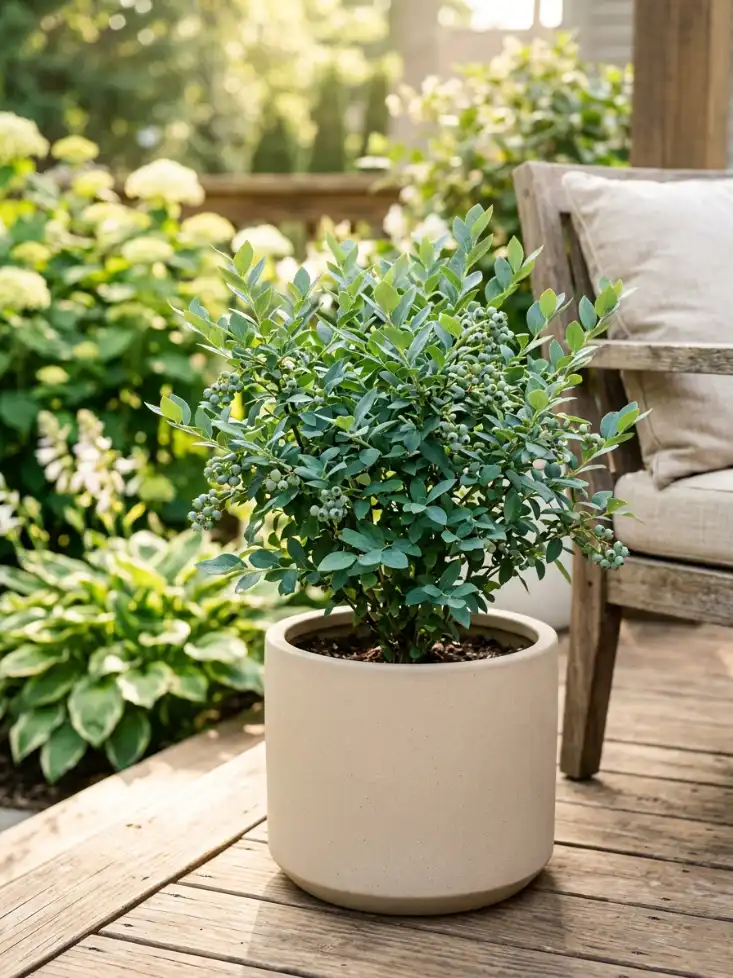
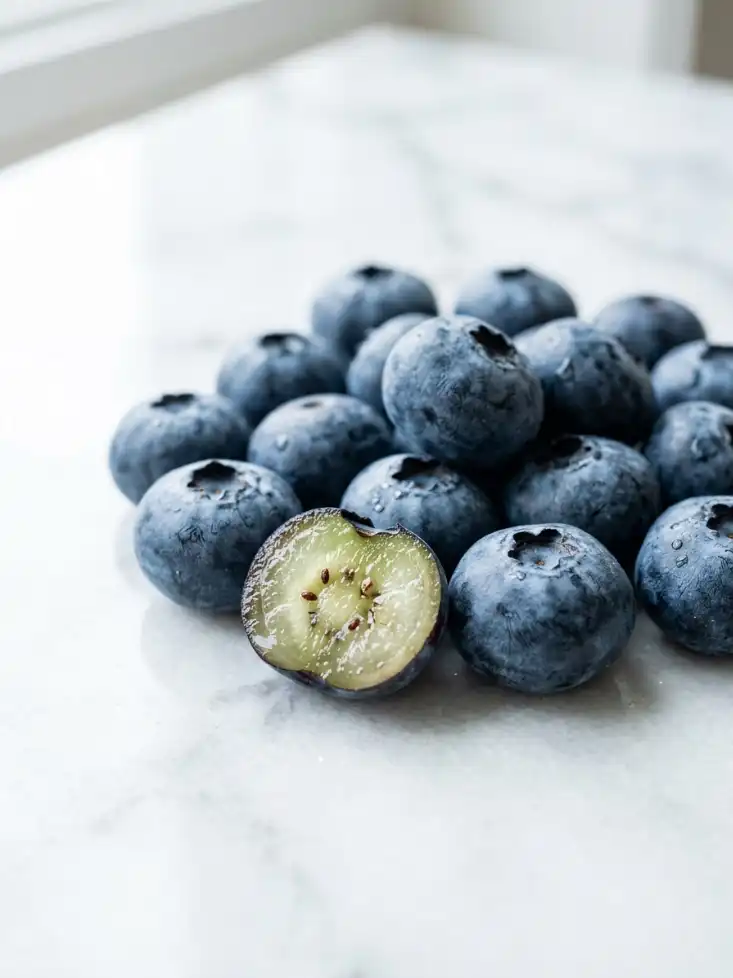
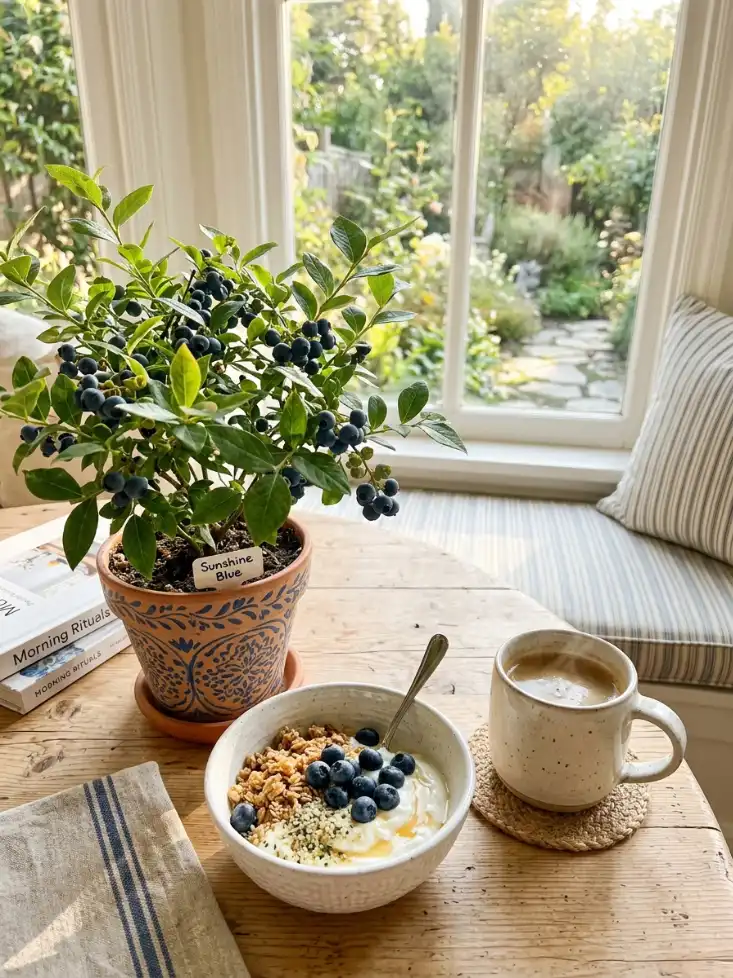
But the real genius of Sunshine Blue is that it did not sacrifice anything to get there. The berries are medium-sized, light blue under a heavy silvery bloom, with a balanced sweet-tart flavor that works beautifully in pies, muffins, and straight out of hand. A mature bush produces 5 to 10 pounds of fruit per season — roughly a gallon bucket’s worth. And unlike many “warm climate” fruit plants that produce bland, watery berries, Sunshine Blue delivers the real thing: classic blueberry taste with a tangy, almost citrus-like brightness on the finish.

Compact, Beautiful, and Built for Containers

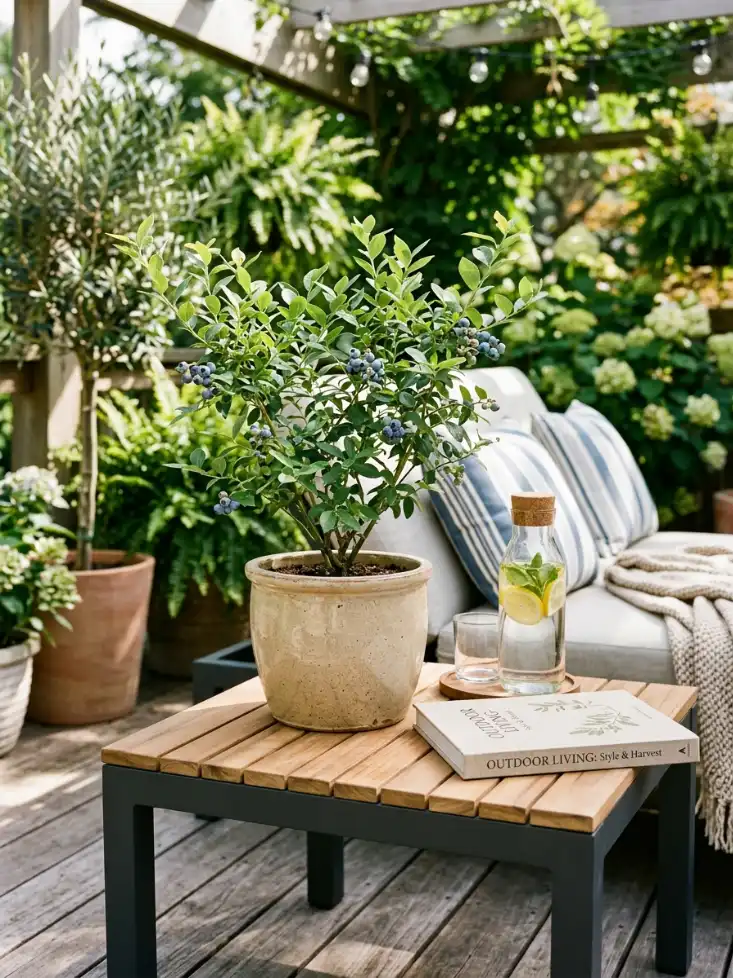
At 3 to 4 feet tall and wide, Sunshine Blue is classified as semi-dwarf — larger than the truly miniature Top Hat, but still compact enough to live its entire life in a 20-inch pot on a sunny patio. It belongs to the southern highbush group of blueberries, a classification that signals its low chill requirement and its tolerance for summer heat that would wilt a northern variety by August.

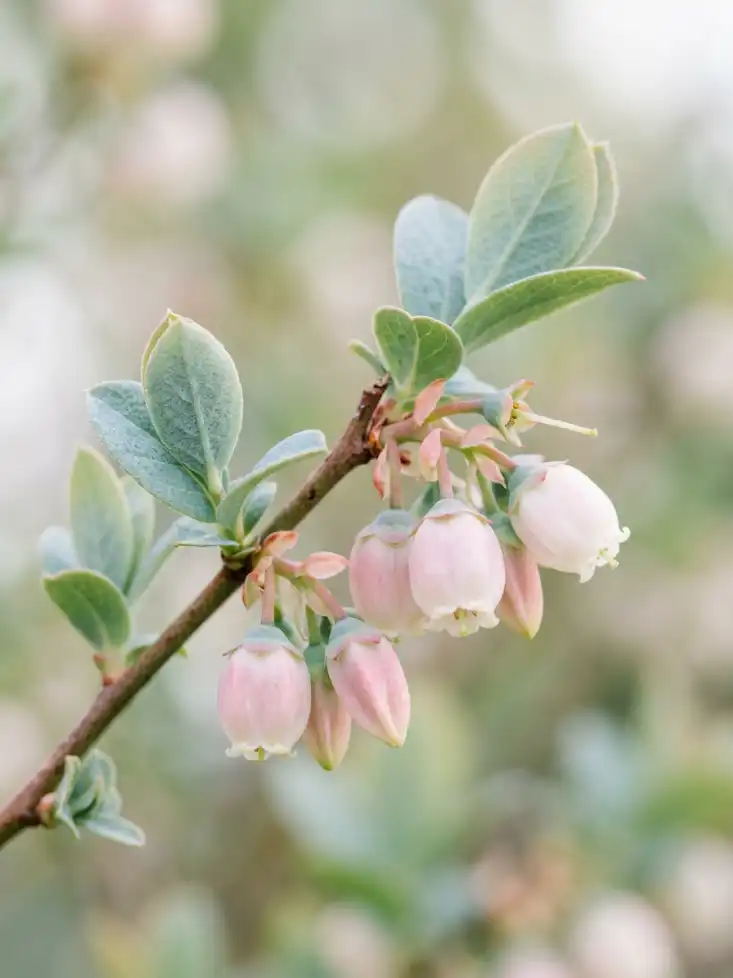
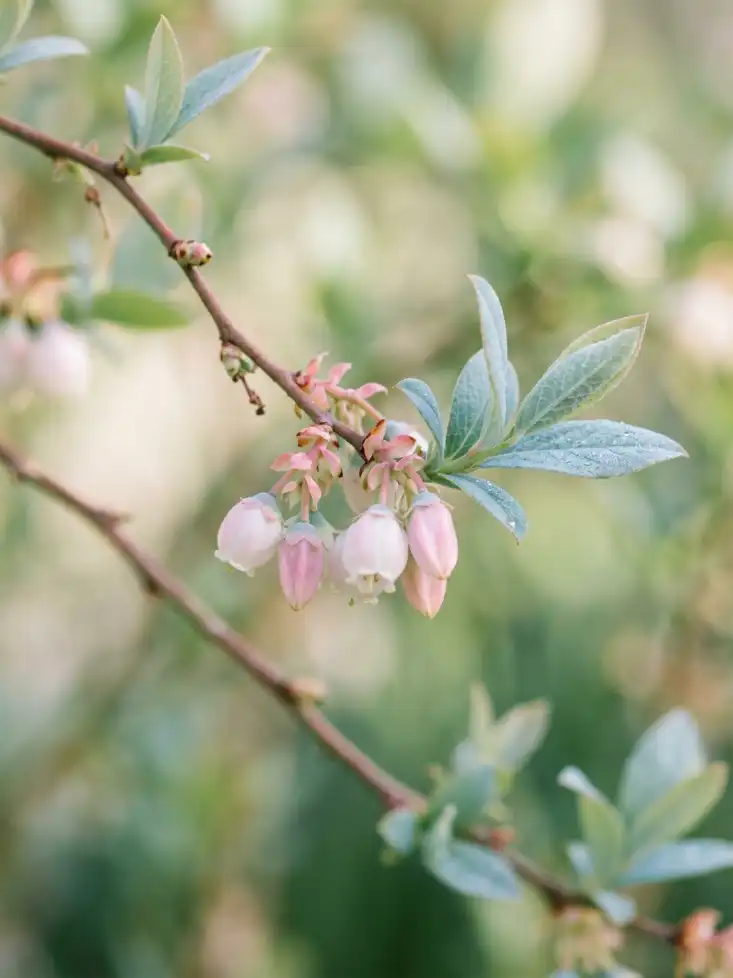
But fruit is only half the story. In early spring, before most garden plants have woken up, Sunshine Blue erupts in clusters of bell-shaped flowers — white with a distinct pink blush, sometimes deepening to hot pink in cooler weather. The display lasts for weeks and draws bees from blocks away. By late spring, the flowers give way to green berries that slowly swell and deepen to a powdery sky-blue. And in autumn, the foliage stages a second show: glossy green leaves shift through burgundy to deep crimson, often hanging on through December in mild climates. In Zone 9 and 10, the plant may stay partially evergreen all winter, providing year-round structure on a patio or in a garden bed.

This is not a one-note plant. It is an ornamental shrub that also feeds you — the kind of dual-purpose performer that earns its place in a small garden where every square foot counts.

Truly Self-Pollinating — No Partner Required

Many fruit plants claim to be self-fertile while quietly demanding a pollination partner for any meaningful harvest. Sunshine Blue is an honest exception. It sets fruit reliably on its own, with no second variety needed. Bees and wind transfer pollen between flowers on the same bush, and the plant’s bloom structure — wide-open bells with easily accessible anthers — makes the process unusually efficient. A single mature bush will give you 5 to 10 pounds of berries, year after year, with no help from its neighbors. That said, if you do plant a second variety nearby, cross-pollination can push yields even higher and increase individual berry size.

The Soil Rule Still Applies

Sunshine Blue tolerates higher soil pH than most blueberries — up to 5.5, compared to the 4.5 that traditional varieties demand — which makes it somewhat more forgiving for beginners. But “more forgiving” is not the same as “anything goes.” You still need acidic soil. You still need a mix built for acid-loving plants: 50 percent peat moss, 50 percent pine bark fines, with a handful of perlite for drainage. You still need to check your irrigation water, because months of alkaline tap water will gradually raise the pH and starve the plant of iron. The symptoms are the same as any blueberry: yellow leaves with green veins, stunted growth, and a harvest that never arrives.

The good news is that Sunshine Blue gives you more time to catch the problem. Its inherited tolerance from the wild Florida blueberry means it stays greener, longer, even as the pH creeps up around it. That tolerance is a safety net, not a license to ignore the soil. Treat it right, and a single plant will reward you with a decade and a half of summer harvests.

A Perfect Pairing

If you garden in Zone 3 through 7 and want a blueberry that laughs at minus 40 degrees Fahrenheit, our Top Hat dwarf blueberry is your plant — 18 to 24 inches tall, absurdly winter-hardy, and bred for containers. If you garden in Zone 5 through 10 and want a heat-tolerant, higher-yielding shrub that doubles as a spring-blooming ornamental, Sunshine Blue is the one. Plant both and you get blueberries from June through August, across two plants that together take up less space than a single standard blueberry bush. They are the patio orchard you did not think you could have.

What You Get

A healthy, well-rooted Sunshine Blue blueberry plant, shipped in a nursery container with established roots. It arrives ready to transplant into a 20-inch or larger pot with acidic potting mix, or directly into a prepared garden bed. With full sun, proper soil, and consistent moisture — see our Sunshine Blue care guide for the complete rundown — expect your first meaningful harvest of 5 to 10 pounds of sweet-tart, silvery-blue berries within one to two growing seasons — and every summer after that for the next 15 to 20 years. For a patio fruit tree with a different flavor, see our self-pollinating Dwarf Stella cherry. — and every summer after that for the next 15 to 20 years.

Looking for more patio fruit? Try our Improved Meyer lemon, Owari Satsuma, Chicago Hardy fig, Jackfruit cutting.
Why Shop With Us

Alive Arrival Guarantee

Every plant arrives healthy or we replace it free. No hoops, no receipts.

Fast, Careful Shipping

Packed to survive the trip and delivered in days. Free on orders $99+.

Lifetime Plant Support

1-on-1 help from real growers, for the life of your plant.

Frequently Asked Questions

I live in Florida. Can I actually grow blueberries here?

Yes — and Sunshine Blue is one of the very few varieties that will fruit reliably for you. Traditional blueberries need 800 to 1,000 chill hours (cumulative time below 45 degrees Fahrenheit) to set fruit. Most of Florida gets 100 to 400 chill hours per winter. That is why standard blueberries fail in the South — they never get the cold signal they need. Sunshine Blue needs just 150 chill hours, which even coastal Central Florida (Zone 9b) provides in a typical winter. It was literally bred from a wild Florida blueberry species (Vaccinium darrowii) collected in the panhandle. This plant is not merely heat-tolerant. It is heat-adapted. Full sun, acidic soil, consistent water — give it those three things and it will produce 5 to 10 pounds of berries for you every summer.

Do I really not need a second blueberry plant for pollination?

Sunshine Blue is one of the few blueberries that is truly self-pollinating with high yields on its own. Many self-fertile fruit plants technically set fruit alone but produce so little that you are disappointed. Not this one. A single mature Sunshine Blue bush — with no other blueberry anywhere nearby — will give you 5 to 10 pounds of berries per season. The plant's flower structure makes pollen transfer unusually efficient: the blossoms are wide-open bells with easily accessible anthers, so bees and even wind do the job thoroughly. That said, if you do add a second variety that blooms at the same time (such as Misty or O'Neal), cross-pollination can increase both the number and the individual size of the berries. But you do not need one. One bush, one pot, one patio — and you will have blueberries.

How does Sunshine Blue compare to Top Hat? Which one should I buy?

They are complementary, not competitors. Top Hat is an ultra-dwarf (18 to 24 inches), high-chill (1,000 hours) blueberry bred for cold climates — hardy to Zone 3, minus 40 degrees Fahrenheit. It is ideal for northern gardeners with freezing winters and limited space. Sunshine Blue is a semi-dwarf (3 to 4 feet), low-chill (150 hours) blueberry bred for warm climates — hardy to Zone 10. It is ideal for southern and coastal gardeners who cannot grow traditional blueberries. Yield is another difference: Top Hat produces 2 to 5 pounds; Sunshine Blue produces 5 to 10 pounds. If you garden in Zone 3 through 7 with cold winters: Top Hat. If you garden in Zone 5 through 10 with mild winters: Sunshine Blue. If you are in the overlap (Zones 5 through 7): plant both. They bloom at slightly different times, which extends your harvest window from June through August.

My blueberry leaves are turning yellow with green veins. What is happening?

That is iron chlorosis — the classic symptom of soil pH that has crept too high. Blueberries need acidic soil (pH 4.5 to 5.5) to absorb iron. When the pH rises above 6.0, iron becomes chemically locked in the soil — present, but inaccessible to the plant. Sunshine Blue tolerates slightly higher pH than most blueberries (up to about 5.5 before showing symptoms), but once you see yellowing, action is needed. The fix, in order: (1) Test your soil pH with a home test kit — do not guess. (2) If pH is above 6.0, apply elemental sulfur at the rate on the package. Sulfur works slowly (weeks to months) because soil bacteria must convert it to sulfuric acid. Be patient. (3) For immediate temporary relief, water with a solution of 2 tablespoons white vinegar per gallon of water, once a week for three weeks. (4) Switch to rainwater or distilled water for irrigation — most tap water is alkaline and is the hidden cause of creeping pH. (5) Do not add iron supplements without fixing the pH. The iron is already there. The plant just cannot reach it.

Can I grow Sunshine Blue indoors or on a balcony?

On a sunny balcony — absolutely. Indoors — not recommended. Sunshine Blue needs 6 to 8 hours of direct sun to fruit well, and even the brightest south-facing window cuts light intensity significantly compared to outdoors. A south-facing or west-facing balcony, patio, or rooftop is ideal. Use a pot at least 20 inches in diameter with large drainage holes. Fill it with acidic potting mix (50 percent peat moss, 50 percent pine bark fines). Water consistently — container plants dry out faster than in-ground plants, and blueberries have shallow roots that cannot tolerate drought. The plant will reach its full 3-to-4-foot size in the container and stay there happily for years with an annual top-dressing of fresh acidic soil. As for true indoor growing: it is possible to keep the plant alive indoors in a very bright sunroom or with powerful grow lights, but fruit production will be significantly lower than outdoors. Sunshine Blue is a sun-loving plant — the name is not a suggestion.

When will I get my first harvest and how long does it last?

Here is the realistic timeline. Year 0 — the year you receive your plant: Pinch off any flowers that appear. You are sacrificing this year's potential berries to redirect energy into roots and stems. It hurts, but it matters. Year 1: The plant roughly doubles in size. You may get a handful of berries — a few dozen at most. Enjoy them as a preview. Year 2: First meaningful harvest: 3 to 5 pounds of berries, ripening over a 4-to-6-week window from early July through mid-August. Year 3 and beyond: Full production at 5 to 10 pounds per season. The harvest window typically runs from late June or early July through August, varying by climate — warmer zones ripen earlier. Berries do not all ripen at once. This is a feature: you pick every few days over several weeks rather than dealing with a single overwhelming harvest. A mature bush in full sun with good soil will produce every summer for 15 to 20 years.

Recently Viewed

Scroll to Top