

The Fig That Should Not Exist
Chicago, Illinois. Zone 5. Winter temperatures routinely drop to minus 10, minus 15 degrees Fahrenheit — cold enough to freeze the soil solid for weeks, cold enough to kill almost any fig tree on Earth. Figs are a Mediterranean plant. They belong to Greece, Italy, Turkey — places where winter means a light frost and a jacket. They do not belong to the Upper Midwest. And yet, in the 1980s, a gardener on the South Side noticed a fig tree growing against a south-facing brick wall that refused to die. Every winter, the top growth froze. Every spring, vigorous new shoots emerged from the base. By August, the tree was covered in ripe figs.
The gardener shared cuttings. The cuttings rooted. The tree was named Chicago Hardy — a tribute to the city where, by every botanical rule, figs are not supposed to grow. Today it is the most widely planted cold-climate fig in North America.
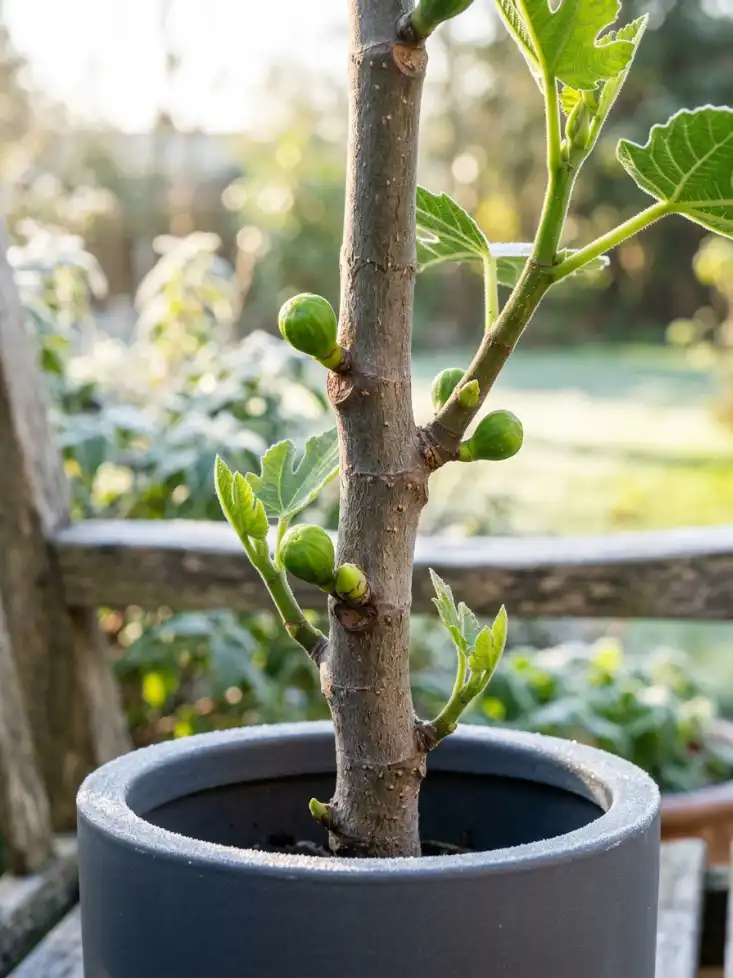
Here is how it works. The Chicago Hardy fig is genetically predisposed to fruit on new wood — the growth produced in the current season. Most fig varieties fruit on last year’s wood, which means a winter that kills the branches also kills the crop. Not Chicago Hardy. Even if the entire above-ground portion freezes to the ground at minus 10 degrees Fahrenheit, the roots survive — and in spring, the plant sends up vigorous new shoots that grow 4 to 6 feet in a single season and set fruit by late summer. In Zones 7 and warmer, where the branches survive winter, the tree also produces an early breba crop in June and July on the previous year’s wood. In Zones 5 and 6, you get the main crop from August through October on the new growth. Either way, you get figs.
Container-Grown, Easily Overwintered
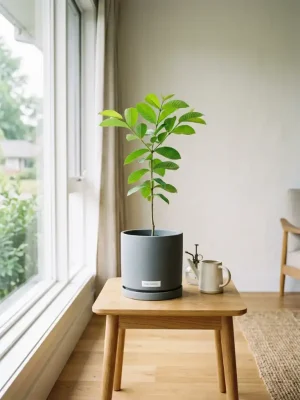
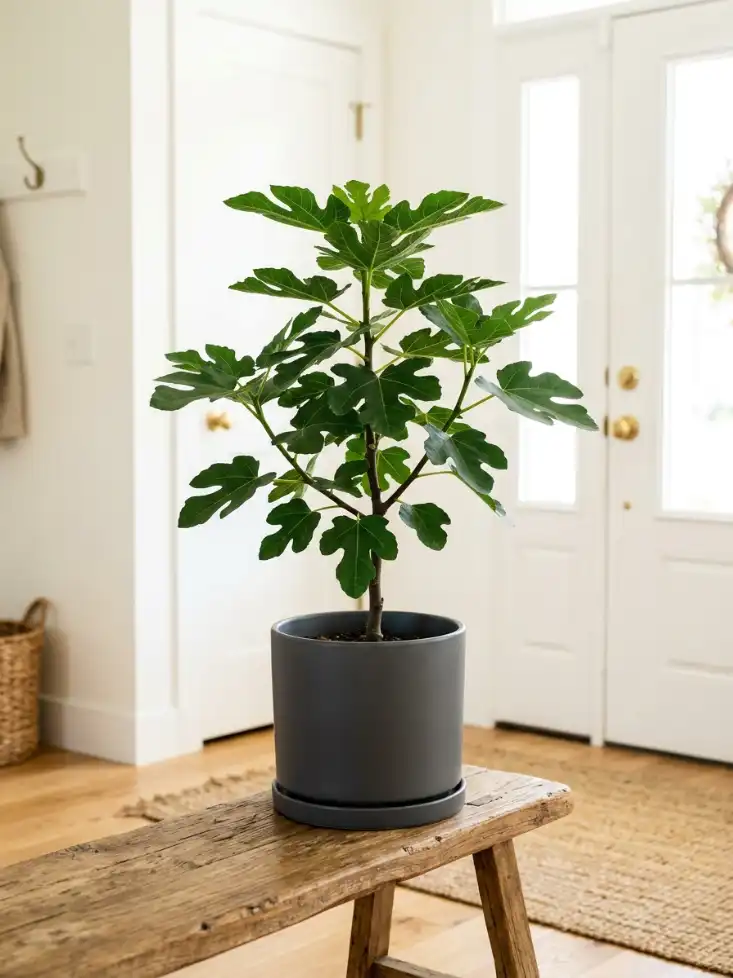
For gardeners in Zones 5 and 6, the most reliable strategy is container growing. Chicago Hardy stays a manageable 4 to 6 feet in a large pot — big enough to produce a meaningful harvest, small enough to move into an unheated garage or shed for winter. The tree needs no light during dormancy. It needs only to stay above about 20 degrees Fahrenheit — well within the range of a typical unheated garage in most of the continental US. Water sparingly once a month during winter. In spring, when nighttime temperatures stay above 25 degrees, wheel the pot back into the sun. The tree will break dormancy within weeks.
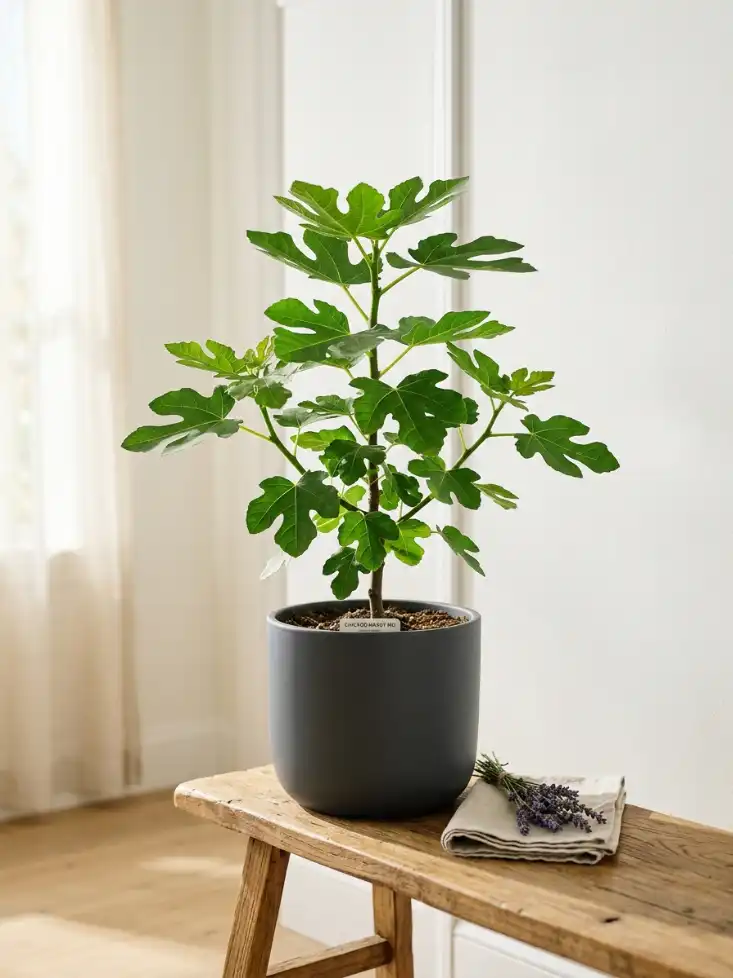
In Zones 7 through 10, Chicago Hardy thrives in the ground year-round, reaching 10 to 15 feet at maturity with a broad, sculptural form. The deeply lobed, tropical-looking leaves — up to 10 inches across — make it one of the most ornamental fruit trees you can grow. In the ground or in a pot, it is self-fertile, drought-tolerant once established, and remarkably pest-free.
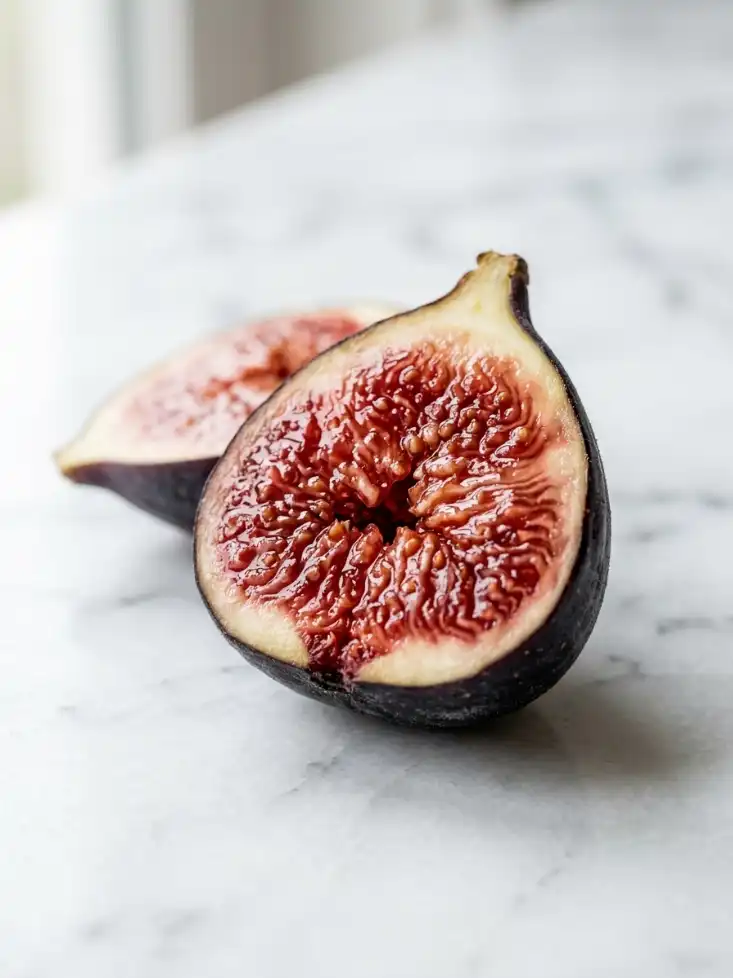
The fruit itself is a deep purple-brown with a rosy blush, about the size of a small plum. The skin is thin and edible. The flesh is strawberry-pink, soft, and intensely sweet — the kind of fig that makes you understand why people have been growing this fruit for 11,000 years. The main crop ripens from August through October, with figs maturing over several weeks rather than all at once, giving you a steady supply for fresh eating, preserves, and drying.
For more cold-hardy patio fruit, see our Dwarf Stella cherry and Owari Satsuma mandarin. For an ultra-dwarf container blueberry, try our Top Hat.
What You Get
A healthy, well-rooted Chicago Hardy fig tree, shipped in a nursery container. It arrives ready to transplant into a 16-inch or larger pot with well-draining potting mix, or directly into a sunny garden bed in Zones 7 through 10. With full sun, consistent moisture, and a layer of winter mulch — see our Chicago Hardy fig care guide for the complete winter strategy — expect your first sweet, purple-skinned figs with strawberry-pink flesh within 1 to 2 years — and increasing harvests for decades thereafter.
Looking for more patio fruit? Try our Sunshine Blue blueberry, Improved Meyer lemon, Jackfruit cutting.

-scaled-300x400.webp)