


The Mandarin That Laughed at the Cold
In the winter of 1894, a freeze of historic ferocity swept across the American South. Temperatures in Florida dropped to 14 degrees Fahrenheit and stayed there. Orange groves were destroyed. Lemon orchards were wiped out. The citrus industry — concentrated in a narrow band of central Florida — faced existential ruin. And then growers walked through the devastation and noticed something strange: the Satsuma trees were fine. Their leaves were intact. Their fruit was unharmed. While every other citrus variety lay dead or dying, the Owari Satsuma stood there looking like winter had never happened.
That freeze changed everything. Within a decade, the Gulf Coast — from the Florida panhandle through Alabama, Mississippi, Louisiana, and Texas — was planted with Satsumas. A new citrus belt was born, built on a single variety that could survive cold snaps that would destroy any other sweet citrus. More than a century later, Owari remains the standard by which cold-hardy citrus is measured — and it remains the most popular mandarin for home growers in the United States.
The fruit itself is what makes the loyalty stick. Owari Satsumas are seedless, easy to peel — the skin practically falls off in your hands — and intensely sweet with low acidity. The segments separate cleanly. Kids devour them. They are what clementines and Cuties aspire to be, but richer, juicier, and with a more complex honeyed flavor. The harvest window is early winter: November through December, often extending into January in mild years. At the exact moment when every other fruit tree in your garden has shut down for the year, the Owari Satsuma is covered in bright orange fruit.
Compact, Beautiful, and Container-Ready
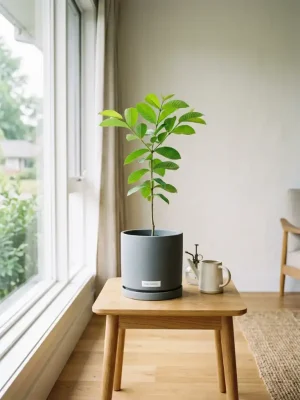
Owari Satsuma is a naturally small tree. Grafted onto dwarfing rootstock — typically trifoliate orange (Poncirus trifoliata) — it stays 4 to 6 feet in a container, with a rounded, weeping habit that looks almost like a large bonsai. The leaves are narrow, dark green, and evergreen. In spring, the tree covers itself in clusters of small, intensely fragrant white blossoms that draw bees from across the neighborhood. By late summer, the tiny green fruit have formed. By November, they have colored to a deep, glossy orange.
It is a four-season ornamental that also feeds you. And unlike Meyer lemons or standard oranges — which need to be brought indoors before the first frost — Owari Satsuma can shrug off temperatures into the low 20s and brief dips to 15 degrees Fahrenheit without significant damage. In Zones 8 through 11, it lives outdoors year-round. In Zones 4 through 7, it summers outdoors and winters indoors like any other container citrus — but with far more cold tolerance during the shoulder seasons, giving you a wider outdoor window in both spring and fall.
The Gulf Coast Legacy
The Satsuma mandarin originated in Japan — specifically in the Satsuma province (modern-day Kagoshima Prefecture) on the southern island of Kyushu, where it has been cultivated since at least the 15th century. The Owari selection, named after a former Japanese province, was introduced to the United States in the 1870s by George R. Hall, an American physician and plant collector who spent years in East Asia. Seedlings were sent to Florida, where they proved remarkably adapted to the humid, occasionally frosty conditions of the Gulf Coast.
Today, Owari Satsuma is grown commercially from California to Georgia, but it is especially beloved by home growers. The reasons are simple: it is the most cold-tolerant sweet citrus in existence, it produces excellent fruit with almost no effort, and a single tree — self-fertile, compact, and stunningly productive — gives you more mandarins than your family can eat in a season. For more cold-hardy patio fruit, see our Dwarf Stella cherry. For an indoor-outdoor citrus with a different flavor, try our Improved Meyer lemon.
What You Get
A healthy, grafted Owari Satsuma mandarin tree on dwarfing rootstock, shipped in a nursery container with established roots. It arrives ready to transplant into an 18-inch or larger pot with well-draining citrus mix, or directly into a sunny garden bed in Zones 8 through 11. With full sun, consistent watering, and monthly citrus feeding — detailed in our Owari Satsuma care guide — expect your first fragrant white blossoms within 1 to 2 years — and clusters of seedless, easy-peel, intensely sweet mandarins every November and December thereafter.
Looking for more patio fruit? Try our Top Hat blueberry, Sunshine Blue blueberry, Chicago Hardy fig, Jackfruit cutting.


-scaled-300x400.webp)