The Lemon That Traveled 6,000 Miles to Find Your Patio
Frank Meyer was not looking for a lemon. The Dutch-born plant explorer, employed by the USDA to scour Asia for useful crops, had already introduced soybeans, pistachios, and Chinese chestnuts to American agriculture when he wandered into a Beijing courtyard in 1908 and saw a fruit he did not recognize. It was round like an orange, yellow like a lemon, and when he cut into it, the rind was thin and fragrant — almost edible. The flesh was sweeter than any lemon he had ever tasted, with a floral, almost herbal aroma. He packed cuttings and sent them home.
The tree that grew from those cuttings was Citrus × meyeri — the Meyer lemon. It is not a true lemon. Genetically, it is a natural hybrid of a citron, a mandarin orange, and a pomelo, which explains everything: the thin, fragrant skin from the mandarin, the floral acidity from the citron, and the heft and juiciness from the pomelo. The flavor is unmistakable — sweeter and less sharply acidic than a grocery-store lemon, with notes of bergamot, thyme, and honey. Chefs obsess over it. Home growers adore it. And unlike a standard Eureka or Lisbon lemon, which needs near-tropical conditions to thrive, the Meyer is remarkably adaptable to container life and even indoor growing.
The “Improved” designation matters. By the 1940s, the original Meyer lemon had spread through California orchards — and it was carrying a symptomless citrus tristeza virus that threatened the entire industry. A virus-free clone was developed at the University of California in the 1950s and released as “Improved Meyer Lemon.” Every Meyer lemon sold by reputable nurseries since the 1970s descends from that clean stock. When you buy an Improved Meyer, you are buying the same extraordinary fruit that Frank Meyer found — without the virus that nearly destroyed it.
A Citrus Tree That Lives Where You Live
Most citrus demands a narrow band of climate: Zones 9 through 11, frost-free, with mild winters and long, hot summers. The Meyer lemon, true to its hybrid vigor, is different. It is cold-hardy down to about 20 degrees Fahrenheit — still not a plant for a Minnesota winter outdoors, but tough enough to survive a light freeze that would kill a standard lemon. In Zones 8 through 11, it thrives outdoors year-round in the ground or in a pot. In Zones 4 through 7, it lives outdoors from spring through fall and winters indoors by a sunny window.
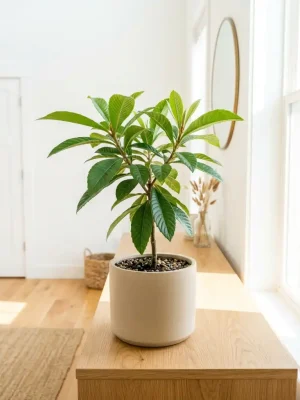
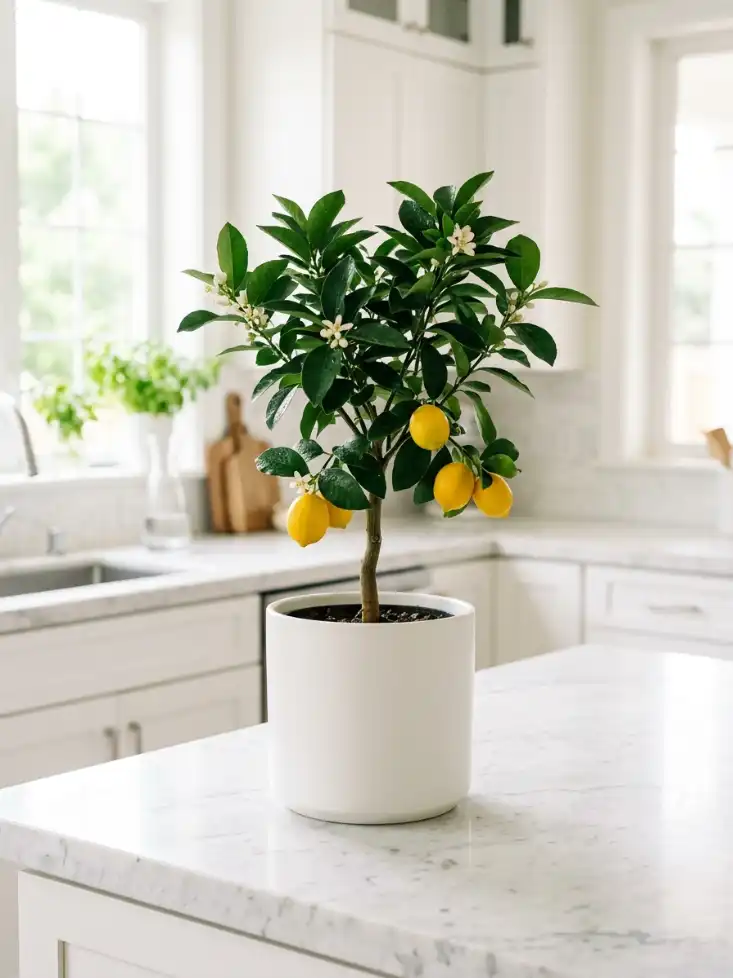
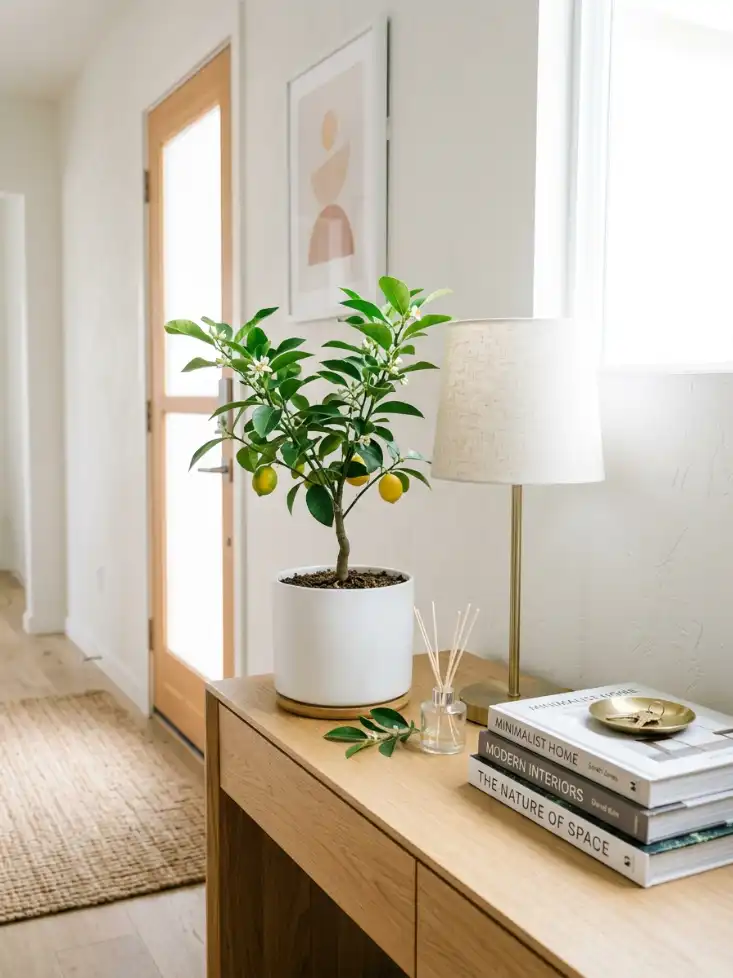
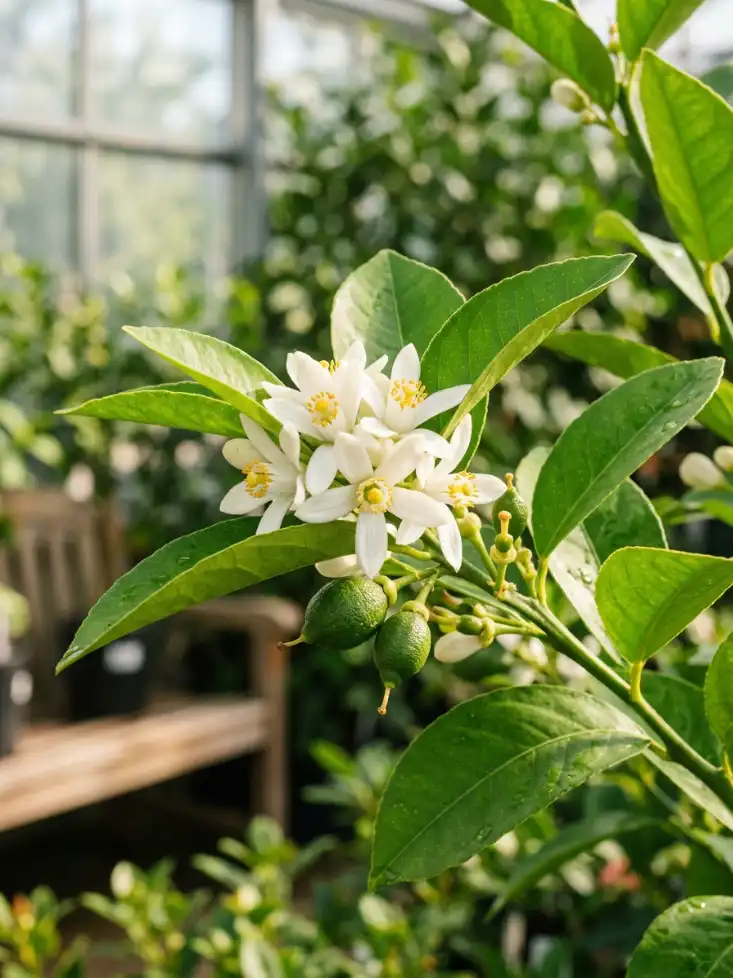
That indoor-outdoor lifestyle is what makes the Meyer the most popular home citrus in America. At 4 to 6 feet tall in a container — kept even smaller with pruning — it fits in a sunroom, a south-facing living room corner, or a sheltered patio. The leaves are glossy and dark green, releasing a subtle citrus fragrance when brushed. The flowers appear in flushes throughout the year — white with a purple blush at the base, intensely fragrant, the kind of scent that fills a room. And unlike most citrus, which fruits once a year, a happy Meyer lemon in a warm climate can flower and fruit simultaneously, giving you ripe lemons in every season.
Sweet, Thin-Skinned, and Endlessly Useful
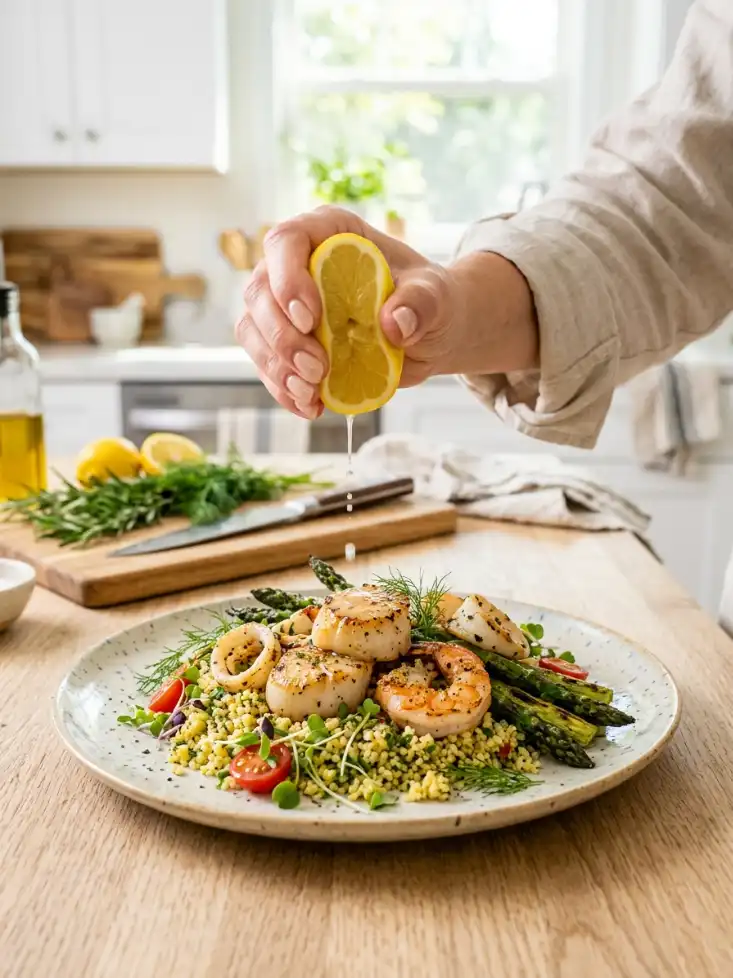
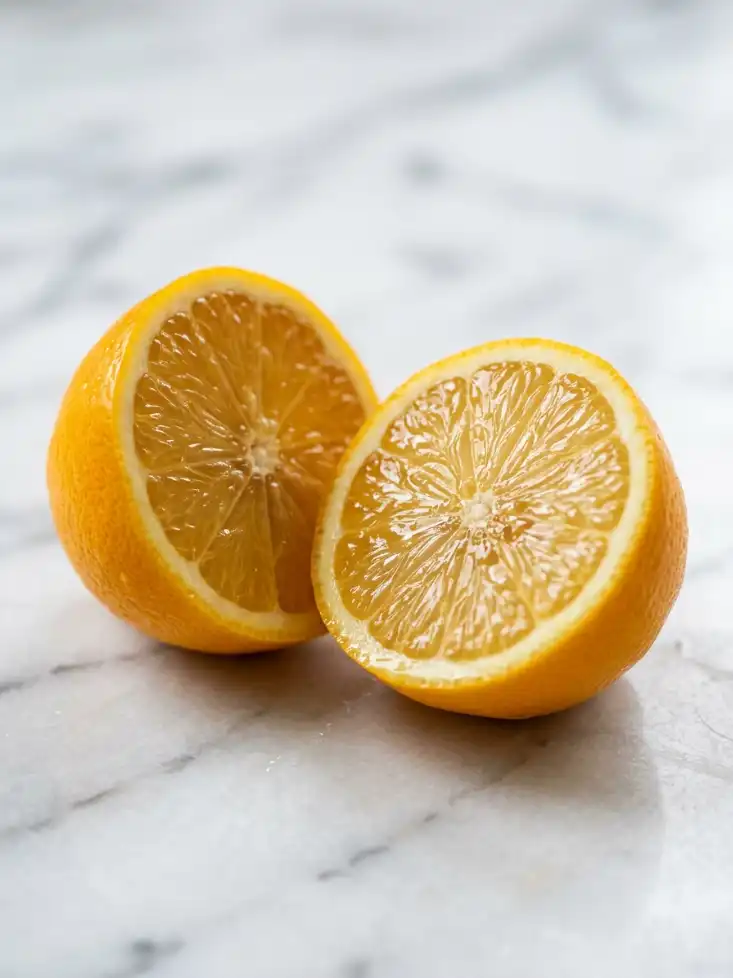
A ripe Meyer lemon is a different fruit from the thick-skinned supermarket Eureka. The rind is so thin and fragrant that you can eat it — candied, zested into dough, or sliced paper-thin into salads. The juice is less acidic than a standard lemon, with a sweetness that means you can use less sugar in lemonade, lemon bars, and marmalade. The flesh is deep yellow with a faint orange blush, juicier than a conventional lemon, and the fruit ripens from green to a warm, egg-yolk yellow when fully ready.
A mature tree in a 20-inch container produces 50 to 100 lemons per year. That is more lemons than most households can use — which is why Meyer lemon owners become the kind of people who give away bags of lemons to neighbors, coworkers, and anyone who makes eye contact. The tree begins fruiting within 1 to 2 years of planting, and it will continue producing for decades.
The Indoor Winter Strategy
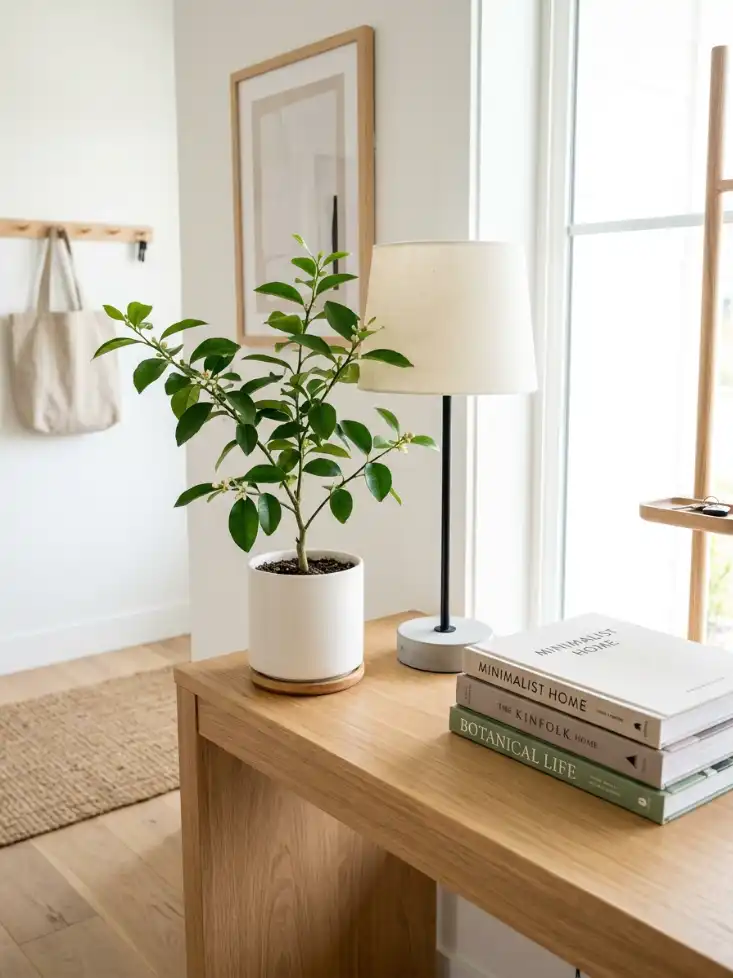
For gardeners in Zones 4 through 7, the Meyer lemon lives a double life. From late spring through mid-autumn, it lives outdoors in full sun — the more heat and light, the better. When nighttime temperatures begin dipping below 45 degrees Fahrenheit, bring it inside. Place it directly against your brightest south-facing window. Not three feet back. Right at the glass. Supplement with a full-spectrum LED grow light if your winter days are short. Water less frequently indoors — the tree’s growth slows and it uses less moisture. Expect some leaf drop as the tree adjusts to lower indoor light. This is normal and temporary. New leaves, adapted to indoor conditions, will emerge within four to six weeks.
This seasonal rhythm — summer outdoors, winter indoors — is the key to Meyer success in cold climates. The tree needs the intense outdoor light of summer to build energy for the fruiting season ahead. A Meyer kept permanently indoors will survive but rarely fruit well. Give it a summer vacation outside, and it will reward you with lemons all winter.
For those gardening in Zones 9 and warmer, see our Sunshine Blue blueberry — another heat-loving patio fruit that thrives where traditional varieties fail. And for more citrus options, our complete Meyer lemon tree care guide covers everything from soil to pruning to troubleshooting yellow leaves.
What You Get
A healthy, grafted Improved Meyer Lemon tree on dwarfing rootstock, shipped in a nursery container with established roots. It arrives ready to transplant into a 20-inch or larger pot with well-draining citrus mix, or into a sunny garden bed in Zones 8 through 11. With full sun, consistent water, and a monthly citrus feeding during the growing season, expect your first fragrant blossoms and sweet, thin-skinned lemons within 1 to 2 years — and 50 to 100 lemons per year thereafter.
Looking for more patio fruit? Try our Top Hat blueberry, Dwarf Stella cherry, Chicago Hardy fig, Jackfruit cutting.


-300x400.jpg)