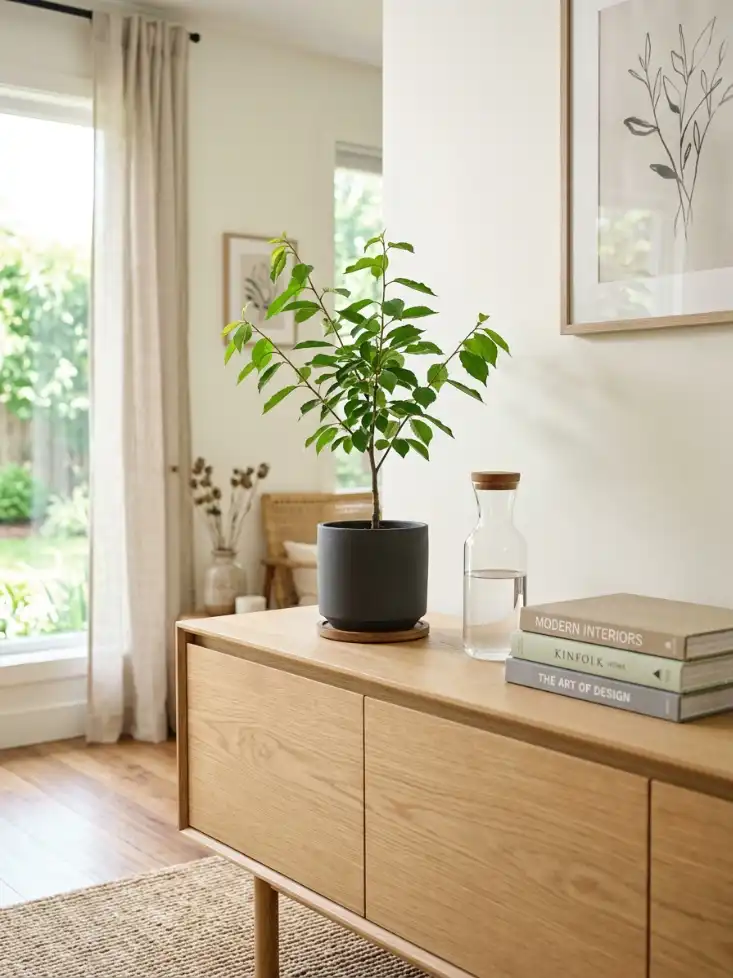
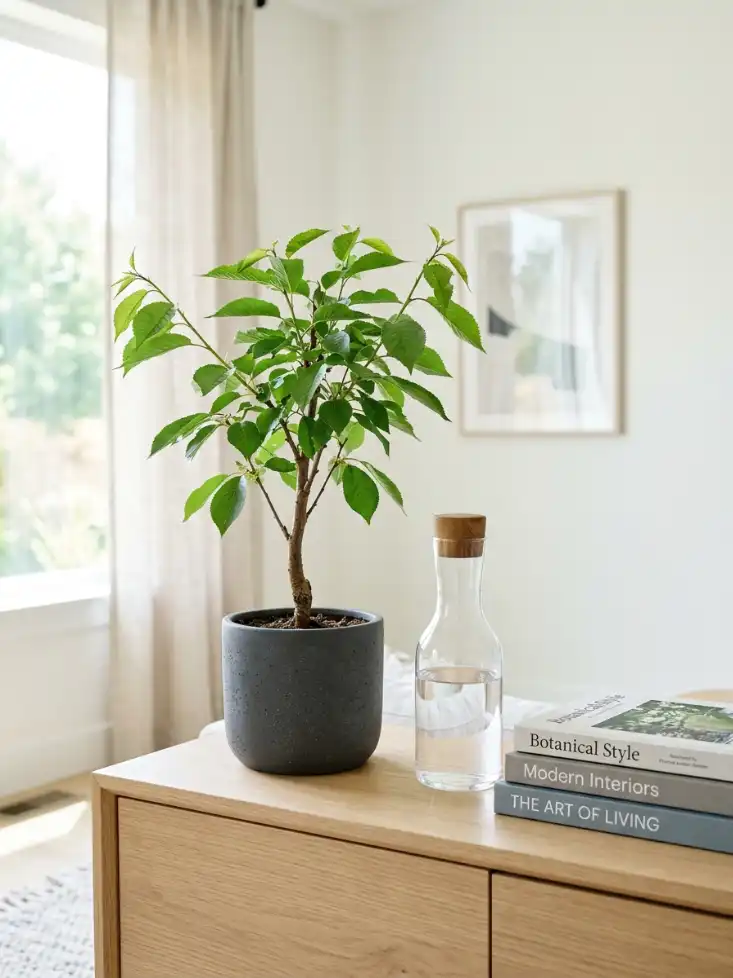
Dwarf Stella Cherry Tree — Self-Pollinating Sweet Cherry on Gisela 5 Rootstock, Patio-Friendly

$62.00

In 1968, a cherry breeder in British Columbia crossed two European varieties and produced something that should not have been possible: a sweet cherry tree that pollinates itself. Stella needs no partner, no orchard, and — grafted onto a Gisela 5 dwarfing rootstock — no more space than a patio corner. It gives you large, dark red, impossibly sweet cherries in mid-July, pink-white blossoms in spring, and autumn foliage in shades of gold. One tree. One pot. All the cherries you can eat.

Full sun, 6–8 hrs Light Deep when top 2″ dry; daily in hot July Water 5–8 USDA Zones 5–8 ft tall, 4–6 ft wide Mature Height
Alive Arrival Healthy on arrival, or we replace it
Free Shipping On orders $99+

The Cherry Tree That Solved Its Own Problem

For most of human history, growing sweet cherries was a two-tree commitment. Cherry trees are famously self-incompatible — the pollen from one variety cannot fertilize the flowers of the same variety. If you wanted cherries, you planted at least two different cultivars that bloomed at the same time. In a suburban backyard or a condo patio, that was often a dealbreaker. Two trees. Twice the space. Twice the pots. No thank you.

Then came Stella. Released in 1968 from the Summerland Research Station in British Columbia, it was the world’s first truly self-fertile sweet cherry — a genetic breakthrough that rewrote the rules of backyard fruit growing. It was named, fittingly, after the Latin word for star. A single Stella tree, alone on a patio or in a corner of a garden, will pollinate its own flowers and produce a full crop of large, heart-shaped, deep red cherries every summer. No second tree. No complicated pollination charts. Just one beautiful little tree doing what cherry trees were never supposed to be able to do.

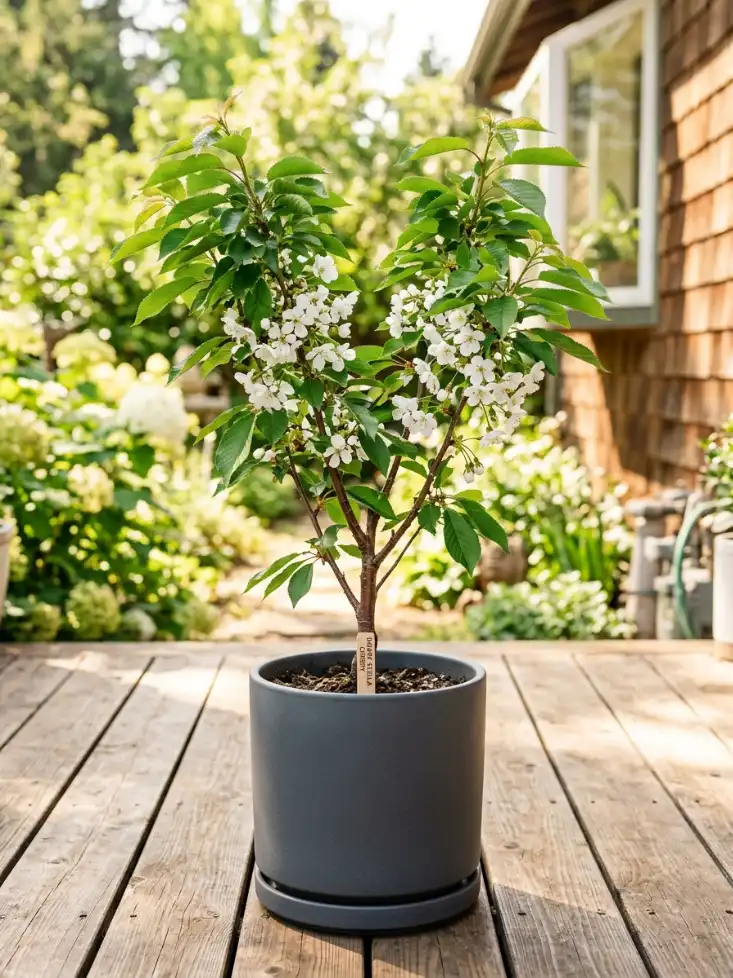
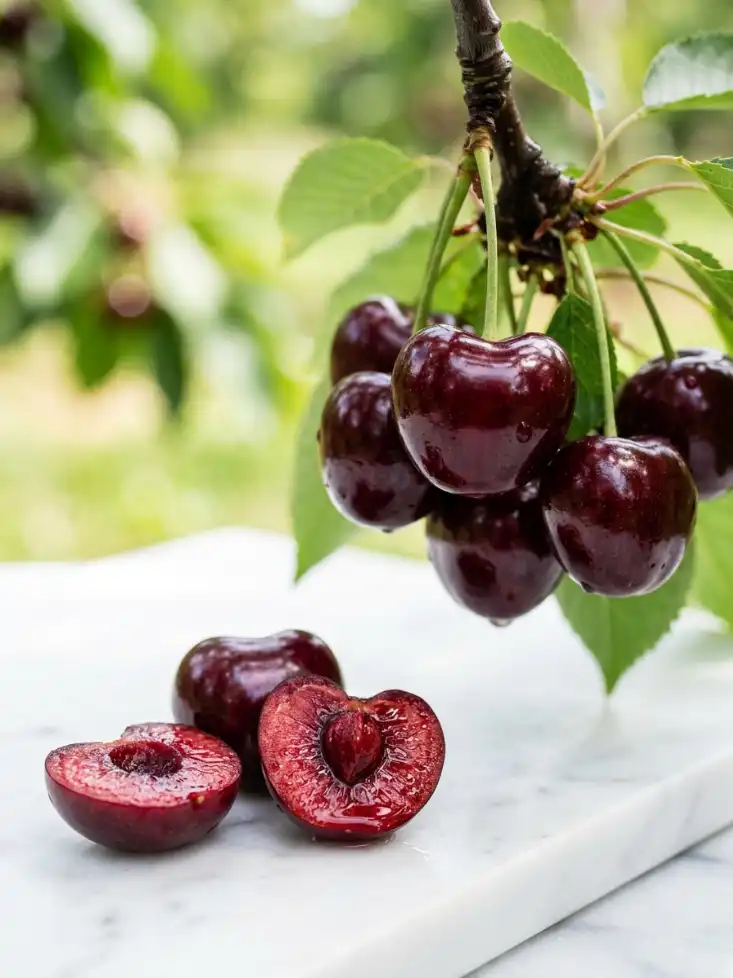
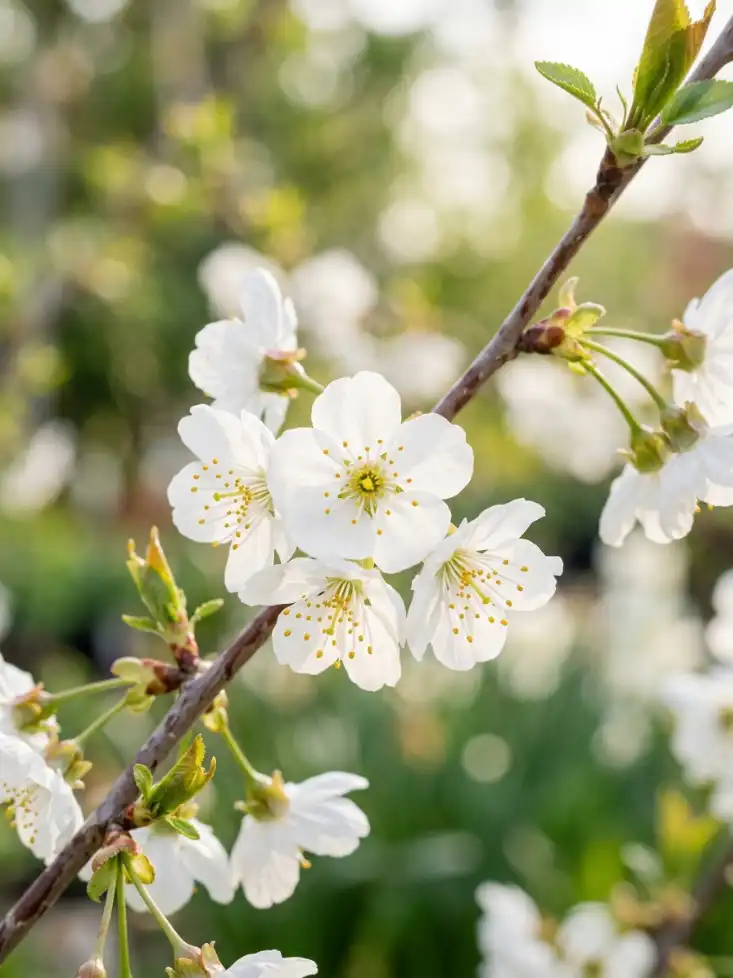
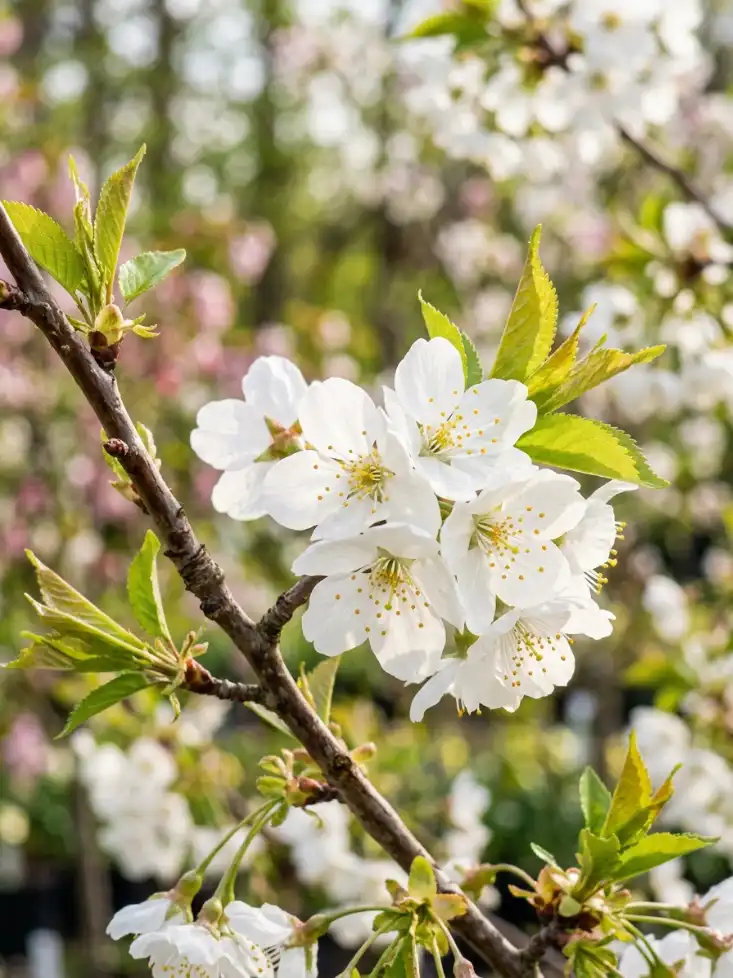
Grafted onto Gisela 5 — the gold-standard dwarfing rootstock for cherries — Stella stays compact at 5 to 8 feet tall and 4 to 6 feet wide. That is small enough for a 20-inch container on a sunny balcony or patio. In spring, it covers itself in clusters of pink-tinged white blossoms that draw bees from across the neighborhood. By mid-July, those flowers have become fruit: large, glossy, dark mahogany-red cherries with firm, juicy flesh and that classic sweet-cherry flavor — rich, aromatic, and balanced with just enough acidity to keep things interesting. A mature tree on Gisela 5 produces 15 to 25 pounds of cherries per season.

Gisela 5: The Rootstock That Makes It Possible

The rootstock matters as much as the variety, and Gisela 5 — a German-bred dwarfing rootstock released in the 1990s — is the industry standard for patio cherries. It reduces tree size to roughly half of a standard cherry, while simultaneously encouraging earlier and heavier fruiting. Trees on Gisela 5 typically begin bearing within 2 to 3 years of planting, compared to 4 to 6 years for cherries on traditional rootstocks. The root system is compact and fibrous, ideal for container life, and the tree channels more of its energy into fruit production rather than vegetative growth.

The tradeoff is that Gisela 5 needs good soil and consistent care — it is not as tough as some seedling rootstocks, and it will not forgive total neglect. Provide a large pot with rich, well-draining soil; full sun; regular water; and a spring feeding. In return, it will give you cherries that taste like they came from a tree three times its size.

A Full-Size Harvest from a Patio-Sized Tree

At maturity — roughly year four or five — a Stella on Gisela 5 produces 15 to 25 pounds of cherries per season, ripening from mid-July into early August over a 3-to-4-week window. That is roughly two to three gallons of fruit from a single tree. The cherries are versatile: eat them fresh by the handful, bake them into pies and clafoutis, or pit and freeze them for winter smoothies and sauces. They store well in the refrigerator for up to a week after picking.

Stella is cold-hardy to USDA Zone 5, which covers most of the continental United States from Chicago north to the Canadian border. It needs approximately 400 to 500 chill hours below 45 degrees Fahrenheit to set fruit — a moderate requirement that is met by most regions outside the Deep South and coastal Southern California. In Zones 8 and above, chill hours may be insufficient for reliable fruiting. If you garden in Zone 9 or warmer, our Sunshine Blue blueberry is the better patio fruit choice. For ultra-compact northern gardens, our Top Hat dwarf blueberry thrives in Zone 3 cold — it needs just 150 chill hours.

One thing every cherry grower learns, usually the hard way: net your tree when the fruit begins to color. Birds can strip a tree clean in a single afternoon. Bird netting, draped over the canopy and secured at the base, is the only reliable defense. Scare tape and plastic owls buy you a day or two. Netting buys you a harvest.

What You Get

A healthy Stella sweet cherry tree, grafted onto Gisela 5 dwarfing rootstock, shipped in a nursery container with an established root system. It arrives ready to transplant into a 20-inch or larger pot with well-draining potting mix, or directly into a sunny garden bed. With full sun, consistent water, and a spring feeding — detailed in our Stella cherry care guide — expect your first cherries within 2 to 3 years — and 15 to 25 pounds of dark, sweet, self-pollinated fruit every July thereafter for decades.

Looking for more patio fruit? Try our Improved Meyer lemon, Owari Satsuma, Chicago Hardy fig, Jackfruit cutting.

Why Shop With Us

Alive Arrival Guarantee

Every plant arrives healthy or we replace it free. No hoops, no receipts.

Fast, Careful Shipping

Packed to survive the trip and delivered in days. Free on orders $99+.

Lifetime Plant Support

1-on-1 help from real growers, for the life of your plant.

Frequently Asked Questions

Does Stella really not need a second cherry tree for pollination?

Yes — this is the entire reason Stella exists. Sweet cherries (Prunus avium) are naturally self-incompatible: pollen from one variety cannot fertilize flowers of the same variety. For centuries, growing cherries meant planting at least two compatible varieties. Stella, released in 1968, carries a rare genetic mutation that disables this self-incompatibility mechanism. Its own pollen can fertilize its own flowers. One tree, alone, will produce a full crop of cherries. That said, while Stella does not need a pollination partner, having bees and other pollinators visit the flowers still matters — the pollen still needs to move from the anthers to the stigma within each flower. Plant pollinator-friendly companion plants nearby (lavender, borage, catmint) to attract bees during bloom. On very still days, gently shaking the branches helps distribute pollen. But you do not need a second cherry tree. That is the promise Stella made in 1968, and it has kept it for over half a century.

Can I really grow a cherry tree in a pot on my patio?

Yes — with the right rootstock and the right care. Stella on Gisela 5 rootstock grows to just 5 to 8 feet and adapts well to container life. Here is the setup: (1) A pot at least 20 inches in diameter and 18 inches deep, with large drainage holes. Half whiskey barrels work beautifully. (2) High-quality potting mix — not garden soil, which compacts in containers — amended with compost and perlite. (3) Full sun: at least six hours of direct light daily. (4) Consistent watering — container trees dry out faster than in-ground trees, and cherry trees on Gisela 5 are shallow-rooted and sensitive to drought. Check daily in summer. (5) Annual spring feeding with balanced fruit tree fertilizer. (6) Winter protection in Zones 5 and 6: insulate the pot with bubble wrap or move to an unheated garage. The tree will stay in that pot for its entire productive life — no need to up-pot as it ages. Expect 15 to 25 pounds of cherries per season at maturity, from a tree small enough to look in the eye.

When will I get my first cherries and how long does the harvest last?

Stella on Gisela 5 begins fruiting earlier than most cherries — typically within 2 to 3 years of planting. Here is the timeline: Year 0: Tree arrives as a young grafted specimen, typically 3 to 5 feet tall. Plant it in its permanent container or garden spot. Year 1: The tree establishes its root system and puts on 12 to 18 inches of new growth. You may see a few flowers. Pinch them off — let the tree focus on roots. Year 2: First meaningful bloom and a small harvest: 3 to 8 pounds. Cherries may be smaller than expected and slightly less sweet — this is normal for young trees. Year 3: 10 to 15 pounds. Fruit quality noticeably improves. Year 4 and beyond: 15 to 25 pounds annually, ripening from mid-July through early August over a 3-to-4-week window. The tree will produce at this level for 25 to 35 years. Harvest when cherries are fully dark red and slightly soft to the touch — cherries do not ripen after picking, so patience at this stage pays off.

Why are my cherries small and sour even though the tree looks healthy?

Three likely causes, and they often happen together: (1) Inconsistent watering during the ripening window. Cherries swell and sweeten dramatically in the final three weeks before harvest. If the tree experiences dry spells during this period — very common in container-grown trees — the fruit stays small and the sugar does not develop. Water deeply and consistently, especially from late June through harvest. (2) The tree is young. First crops on young dwarf trees are almost always disappointing — small fruit, modest sweetness. This is not a problem with the variety. The tree is simply putting its energy into building wood and roots rather than perfecting fruit. Quality improves markedly by year four. (3) Overcropping. Stella on Gisela 5 can set more fruit than it can fully develop. If the tree is loaded with small green cherries in June, thin them: remove about a third of the developing fruit, leaving 4 to 6 inches between remaining cherries. This redirects the tree's resources into fewer, larger, sweeter fruits. It feels counterintuitive to remove potential cherries, but the ones that remain will be dramatically better.

Do I really need to net the tree against birds?

Yes. This is not optional. Birds — especially robins, starlings, and cedar waxwings — can strip a cherry tree clean in a single afternoon. They know exactly when the fruit is ripe, often beating you to it by a day. Install bird netting when the cherries begin to turn from green to pink — this is when birds start paying attention. Drape the netting over the entire canopy and secure it at the trunk or around the pot with twine or clips, making sure there are no gaps near the bottom. Leave the netting on until harvest is complete, then remove it so the tree can grow unimpeded. Scare tape, reflective spinners, and plastic owls work for approximately three days before birds realize they are props. Fake predators do not work. Sounds do not work. Netting works. It is inexpensive, reusable year after year, and takes five minutes to install. It is the difference between a bowl of cherries and a tree full of pits.

Is Stella cherry toxic to pets?

The ripe fruit flesh is safe in small quantities, but the pits, stems, and leaves are toxic to dogs and cats. Cherry pits contain amygdalin, a cyanogenic glycoside that releases cyanide when chewed or digested. A single pit accidentally swallowed whole by a large dog is unlikely to cause problems — it will pass through. But chewed pits, multiple pits, or access to fallen leaves (which concentrate toxins as they wilt) can be dangerous. Symptoms of cyanide poisoning include dilated pupils, difficulty breathing, bright red gums, and collapse — this is a veterinary emergency. Practical prevention: keep pets away from the area under and around the tree, especially in autumn when leaves drop. Clean up any fallen fruit promptly. The risk is manageable with basic precautions, and millions of households safely keep cherry trees and pets together. But the risk is real — unlike blueberries, cherries are not pet-safe, and the distinction matters.

Scroll to Top