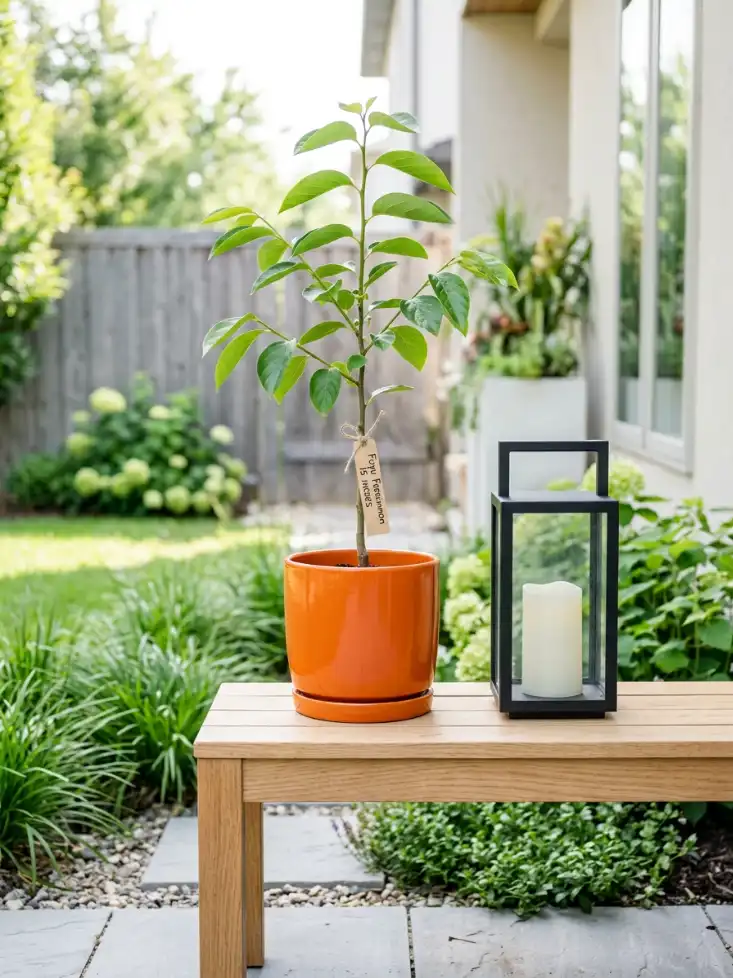

Why Grow a Persimmon Tree?
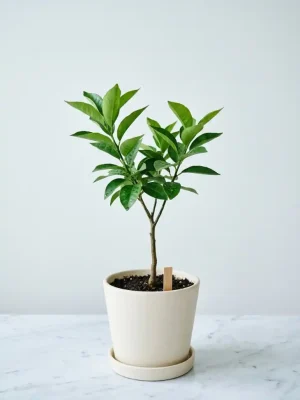
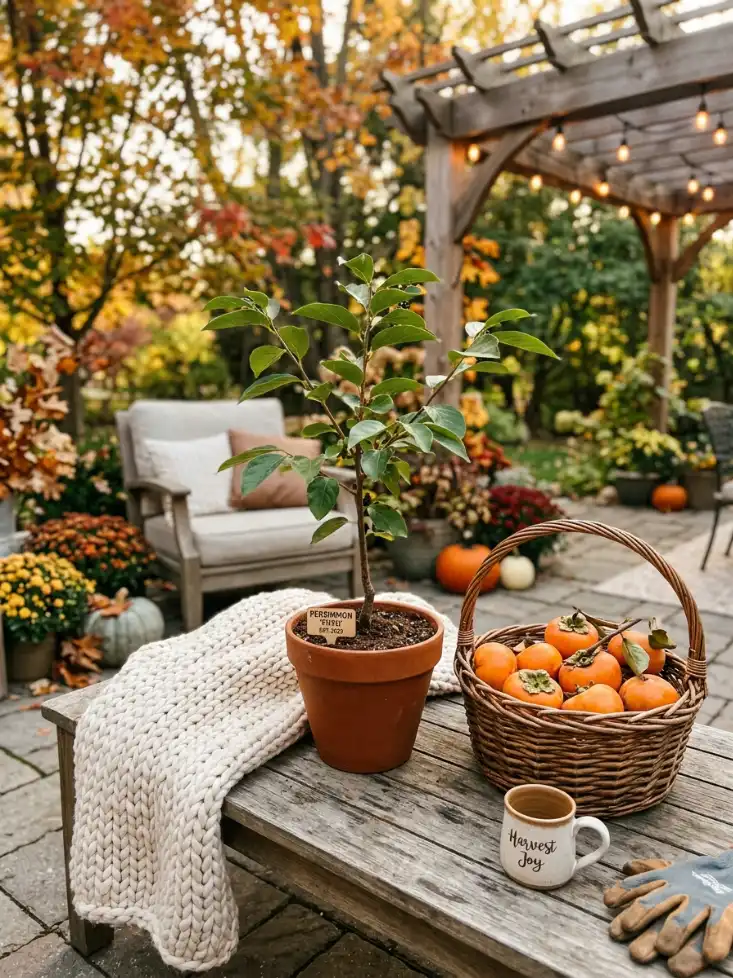
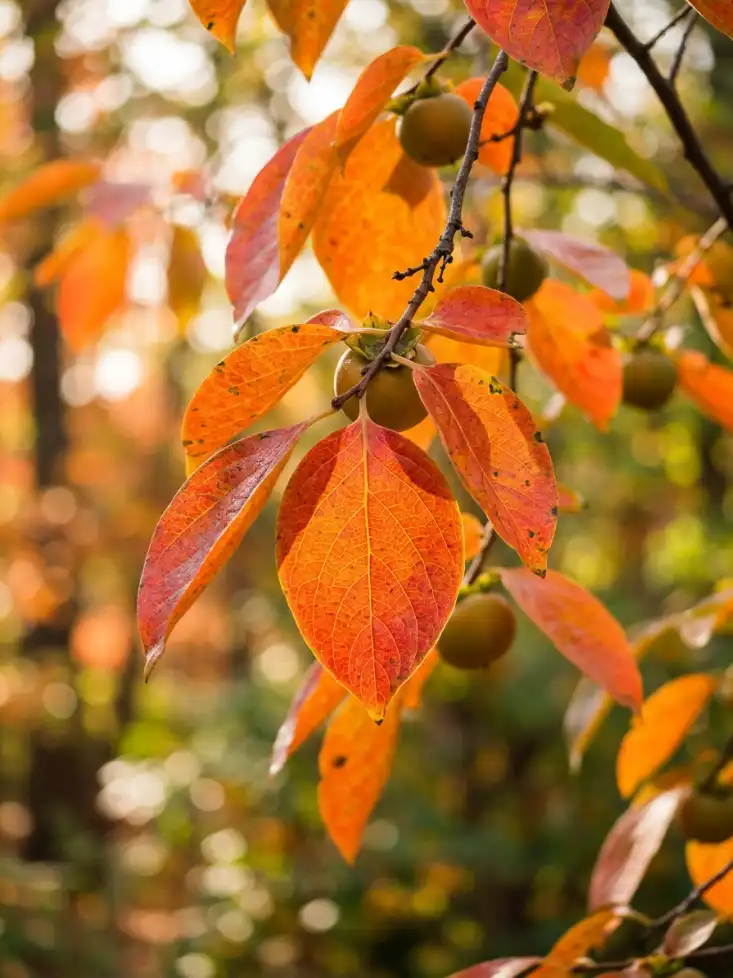
A persimmon tree gives you two things at once. Glossy orange fruit on bare branches in November. And fifty years of harvests from a single tree. It is slow to establish but nearly indestructible once mature. One tree can produce up to eighty pounds of fruit every year.
Our bare-root seedlings ship dormant. They wake up in your soil, adapt to your conditions, and grow stronger than container trees. You also save money. Bare-root trees cost less to ship and establish faster when planted correctly.
| Tree Type | Bare-root seedling — dormant, ready to plant |
| Years to Fruit | 3–4 years for first harvest |
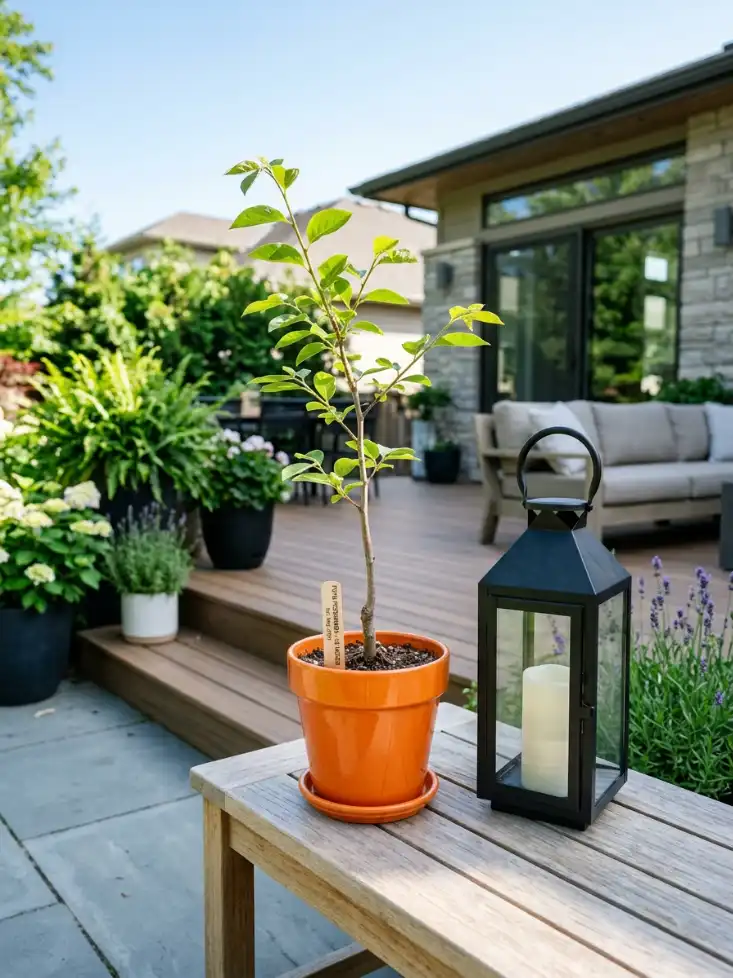
| Mature Size | 15–25 ft in ground, 8–12 ft in container |
| USDA Zones | 7–10. Protect young trees from frost in zone 7 |
| Light | Full sun — 6+ hours of direct light |
| Soil | Well-draining, pH 6.0–7.5. Adapts to most soils |
| Pollination | Self-fertile — one tree fruits alone |
Astringent vs Non-Astringent — The Bite That Taught Everyone a Lesson
There are two kinds of persimmons. The difference matters because it determines how you eat the fruit.
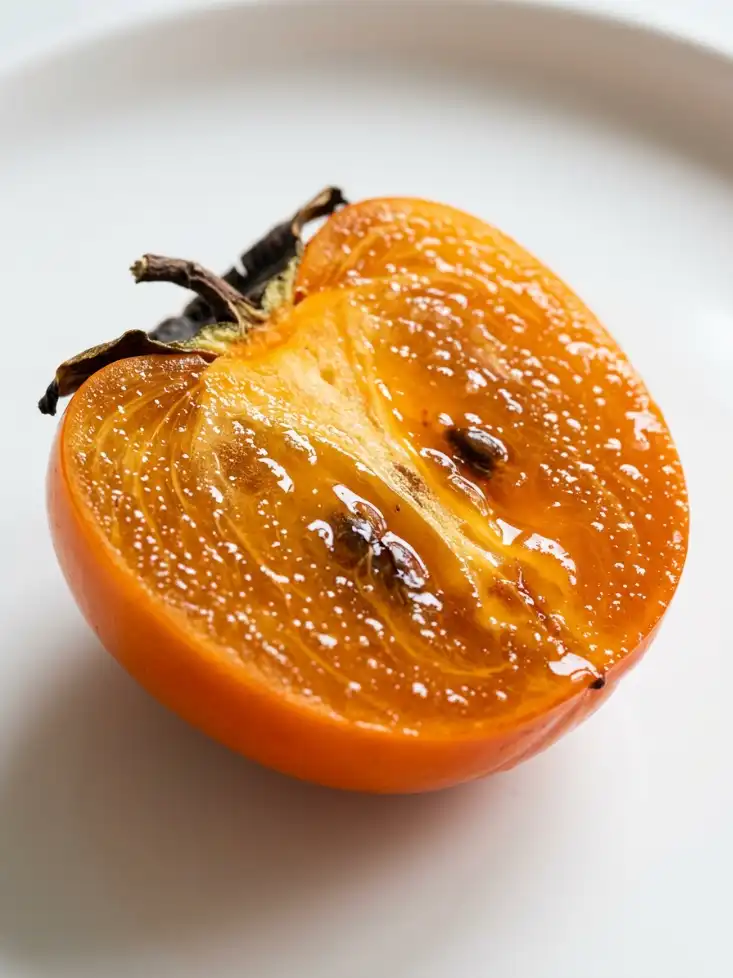
Astringent types like Hachiya must be fully soft before eating. Bite into one too early and the tannins turn your mouth to cotton. Wait until it feels like a water balloon about to burst. Then it transforms into honey-sweet jam.
Non-astringent types like Fuyu and our Chocolate Persimmon can be eaten crisp. Slice them like an apple. The flavor is milder and the texture is firm. No waiting required.
Planting Bare-Root Persimmons
- Soak the roots. Submerge in room-temperature water for four to six hours before planting. This rehydrates the fine root hairs.
- Dig a wide hole. Twice as wide as the root spread. Just deep enough that the root crown sits at soil level.
- Do not amend the hole. Bare-root trees establish better in native soil. Too much compost in the hole creates a pot effect that traps roots.
- Water in deeply. Five gallons, slow trickle. This settles soil around the roots and eliminates air pockets.
- Mulch three inches deep. Keep mulch four inches from the trunk.
Watering & Feeding
Water young trees deeply once a week during the first two summers. Established trees are drought-tolerant. Water every two to three weeks in dry weather.
Persimmons are light feeders. A compost top-dressing in spring is usually enough. University of Florida IFAS Extension confirms persimmons are among the most pest-resistant and soil-tolerant fruit trees for home orchards. If growth is slow, apply a half-rate balanced fertilizer in early spring. Too much nitrogen causes fruit drop.
Pruning — Minimal and Patient
Persimmons naturally grow with good structure. Remove dead or crossing branches. Thin the canopy lightly for airflow. Prune in late winter while the tree is dormant.
Do not over-prune. Persimmons fruit on new growth and on two-year-old wood. Aggressive pruning removes your crop.
Harvesting
Non-astringent types are ready when fully colored and slightly soft. Pick them firm. Astringent types must be jelly-soft. The fruit turns deep orange and feels like an overripe tomato. Let them ripen on the tree. They do not ripen after picking.
Frequently Asked Questions
How long until my tree fruits?
Three to four years from a bare-root seedling. Full production begins around year six. Our trees are grafted selections, not random seedlings.
Do I need two persimmon trees?
No. Most persimmons are self-fertile. One tree fruits alone. Bees improve fruit set but are not required.
Can I grow persimmon in a container?
Yes. Choose a non-astringent variety like Fuyu or Chocolate for container growing. Use a fifteen-gallon pot minimum. See our complete persimmon care guide.
🍊 Ready to Grow Persimmons?
Our bare-root persimmon seedlings ship dormant in spring. Read our complete care guide for seasonal instructions.
📖 Free Care Guide Included
Every plant ships with our complete care guide — watering, pruning, troubleshooting, and seasonal calendar. Read the full guide before your tree arrives →
New to fruit tree care? Read our complete Fruit Tree Care Guide — soil, watering, pruning, and organic pest control for every backyard orchard.