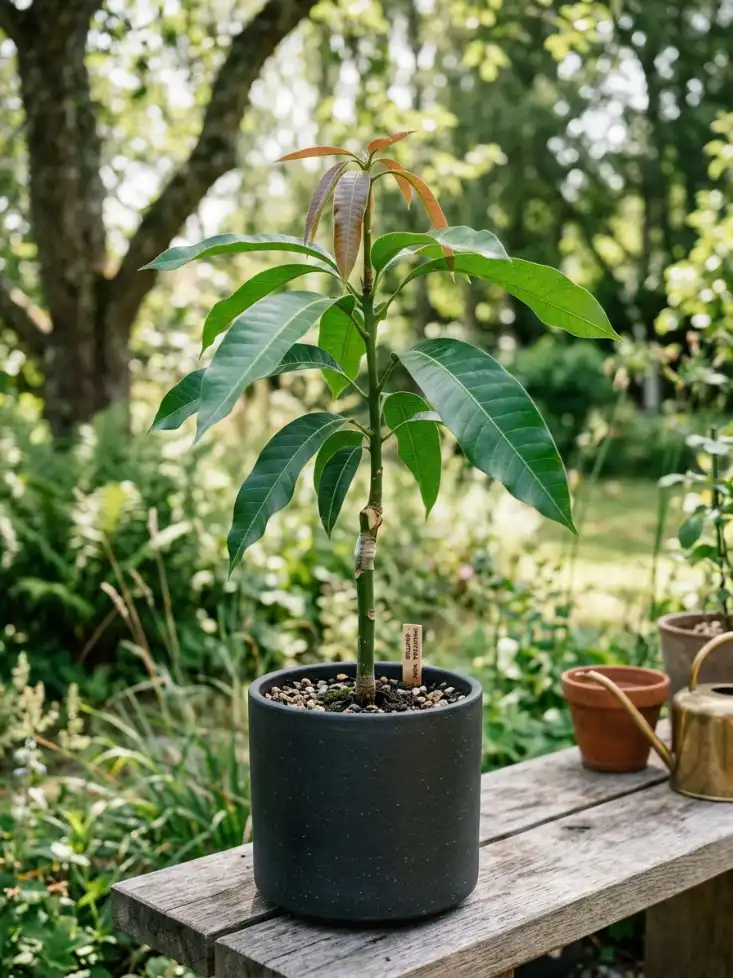
The Bare Root Mango Worth Moving to Florida For
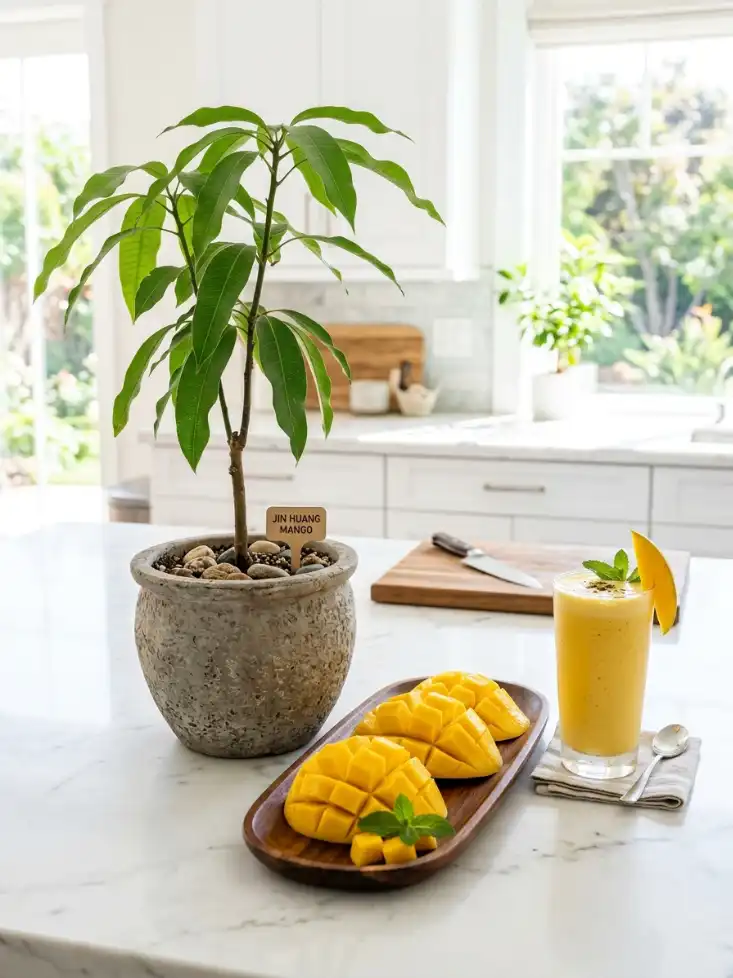
A supermarket mango — picked green in Mexico, hot-water-treated at the border, and ripened in a warehouse with ethylene gas — tastes fine. Sweet, pleasant, vaguely tropical. A tree-ripened mango, still warm from the afternoon sun, eaten standing over the kitchen sink with juice running down to your elbows, tastes like a completely different fruit. The flesh is deeper gold, the sweetness more complex, the texture smoother and denser. There are floral notes of rose and orange blossom that disappear within hours of picking and never make it to a grocery store shelf. This is the fruit that has been called the King of Fruits for over 4,000 years, and a bare root mango tree is how you finally taste the real thing.
A Long-Term Investment With the Biggest Payoff
A bare root mango tree is not a short-term proposition. A grafted sapling takes 3 to 4 years to produce its first meaningful crop. It wants full, blazing sun. It wants consistent warmth. It wants you to pay attention to when you water and when you do not. In zones 10 and 11, it thrives outdoors. Everywhere else, it lives in a large container that summers outside and winters in the brightest, warmest indoor spot you have. This is a commitment. But the payoff — a 10-year-old tree producing 100 to 200 fruits annually, each one a perfect, fragrant, golden orb that bears no resemblance to anything in a grocery store — is the reason gardeners plant mango trees. This is the long game, and it is worth playing.
Sourced for Container Success
We source our bare root mango trees from nurseries that graft named varieties onto dwarfing rootstock selected for container adaptability and earlier fruiting. University of Florida Extension covers mango cultivation for home growers. Browse our full fruit tree collection for more tropical investments.
Why a Bare Root Mango Tree Earns Its Place
The Flavor Cannot Be Bought
Commercial mangoes are picked at mature green — physiologically developed but unripe. They never develop the full sugar content or aromatic complexity of a tree-ripened fruit. A homegrown mango left on the tree until it pulls away with a gentle twist has 20 to 30 percent more sugar, a completely different aromatic profile, and flesh so smooth it can be eaten with a spoon. The fragrance alone — sweet, resinous, floral — is detectable from across the room. This is a fruit that cannot be purchased at any price because a truly ripe mango cannot be shipped. It must be grown. A bare root mango tree is how you access a flavor that has been cultivated for four millennia and has never been available in a supermarket.
Important: Mango Skin and Poison Ivy Are Cousins
Mango belongs to the Anacardiaceae family — the same family as poison ivy, poison oak, and cashews. The skin and sap contain urushiol, the same allergenic oil found in poison ivy. People highly sensitive to poison ivy may react with contact dermatitis from mango skin. The fruit flesh is completely safe. To eat safely: have someone not sensitive peel the fruit, or wear disposable gloves. Do not bite into an unpeeled mango. This is a handling awareness issue, not a reason to avoid mangoes. Millions of people who are sensitive to poison ivy eat mangoes safely every day by simply not handling the skin.
A Tree That Earns Its Space Every Day
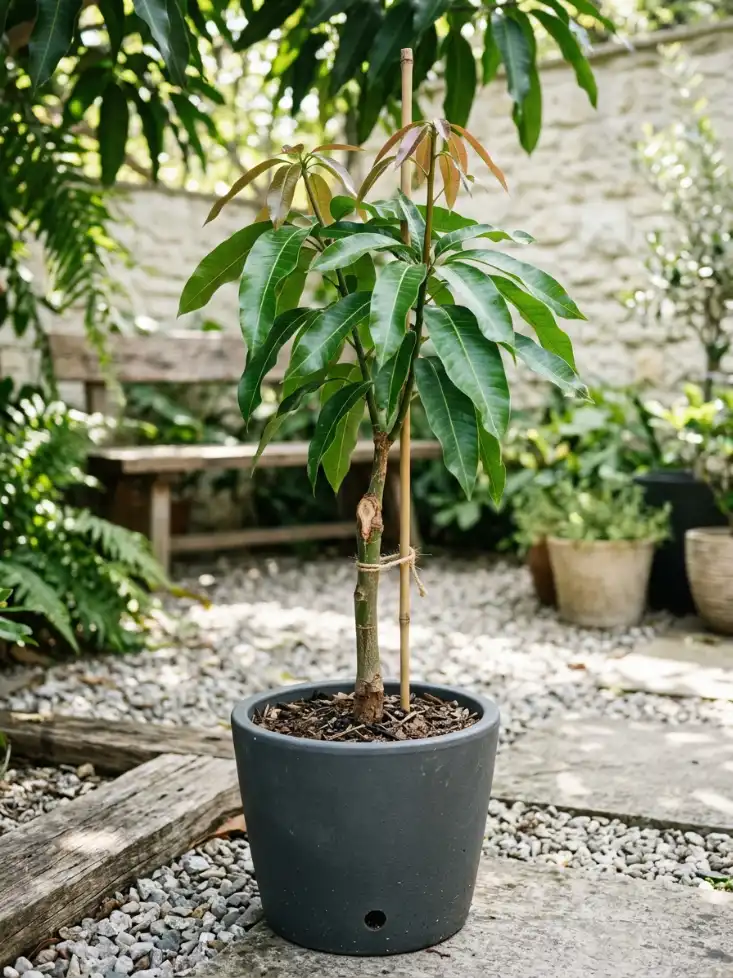
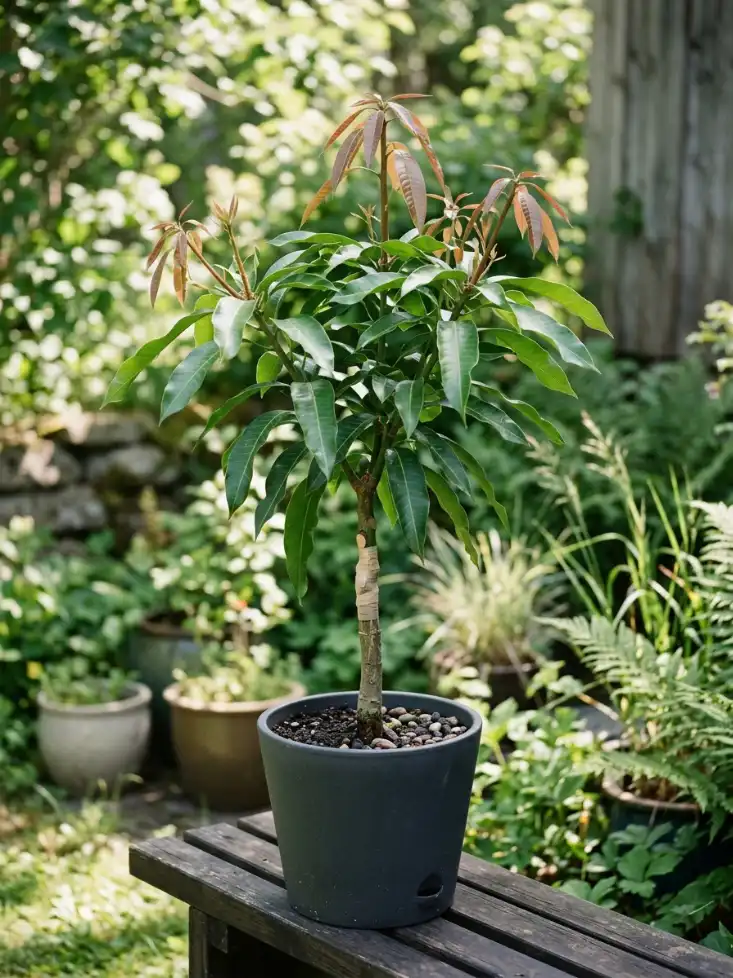
The mango tree is a dense, handsome evergreen with glossy dark leaves that emerge coppery-red. In late winter, it produces large panicles of tiny fragrant flowers — hundreds of them — of which a small percentage set fruit. Even when it is not fruiting, it is a beautiful tree. A container mango on dwarfing rootstock stays 6 to 8 feet tall with annual pruning and produces 10 to 30 fruits per year. In the ground in zones 10 and 11, it reaches 15 to 30 feet. The tree can remain productive for 50 years or more. A well-maintained mango planted today will be feeding your grandchildren.
What to Expect When Your Tree Arrives
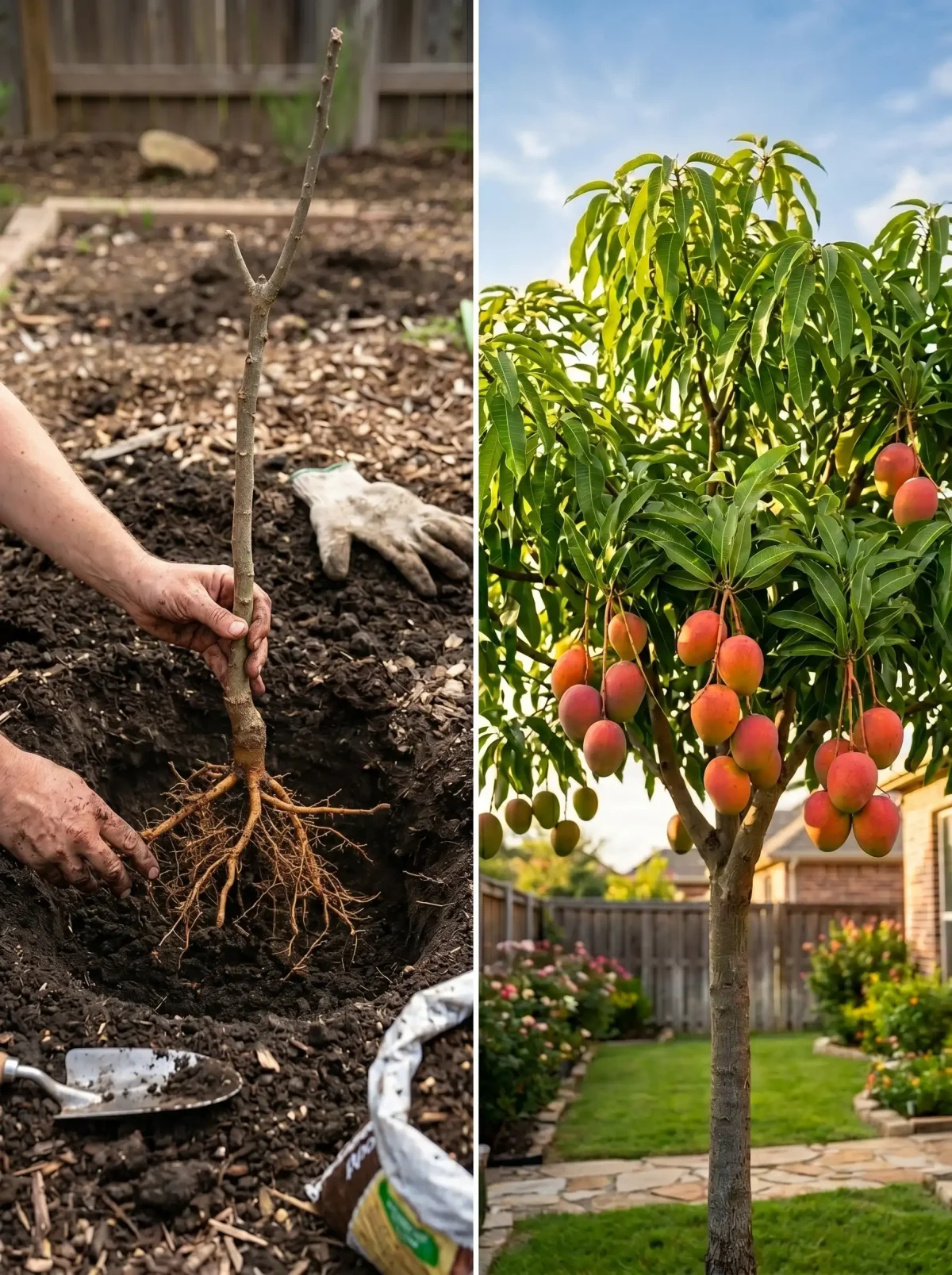
Your bare root mango tree arrives dormant, ready to plant. Soak the roots for 2 to 4 hours. Choose the sunniest, hottest spot you have — full sun for 8 or more hours daily is non-negotiable. Plant in well-draining soil. Water deeply and regularly during the first two years. Pinch off any flowers that appear during this establishment period to redirect energy into roots and branches. By year three or four, let the tree flower and set a few fruit. By year five or six, it hits its stride. In zones 9 and below, grow in a large container and move indoors before temperatures drop below 40 degrees Fahrenheit. Browse our full fruit tree collection for more long-term edible investments.
📖 Free Care Guide Included
Every plant ships with our complete care guide — watering, pruning, troubleshooting, and seasonal calendar. Read the full guide before your tree arrives →
New to fruit tree care? Read our complete Fruit Tree Care Guide — soil, watering, pruning, and organic pest control for every backyard orchard.
-scaled-300x400.webp)


