Why the Golden Lotus Banana Stops People in Their Tracks
The Golden Lotus Banana (Musella lasiocarpa) is not a true banana — it is something rarer and more cold-hardy. When people ask me what makes a golden lotus banana plant worth growing, I tell them it is three things and more interesting. Native to the high mountains of Yunnan, China, where it grows at elevations up to 9,000 feet (Missouri Botanical Garden confirms its native range), this compact perennial produces a flower that looks like a golden artichoke crossed with a lotus blossom. The bloom sits atop the pseudostem like a crown, its waxy yellow bracts opening over several months — often from June all the way into December. I have watched visitors to my garden walk straight past a blooming rose bush to ask about this plant to ask “what is THAT?” about the Golden Lotus Banana.
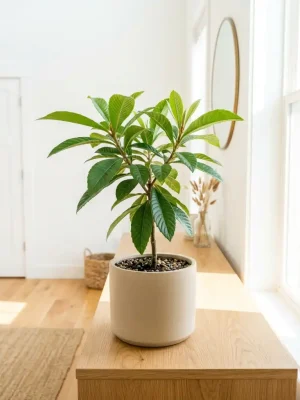
What you get: A healthy, nursery-grown Golden Lotus Banana pup (offset) with established roots, approximately 8–14 inches tall, shipped in its original nursery pot. The plant typically reaches 3–5 feet tall and wide at maturity. Blooms begin in year 2 or 3 once the pseudostem is mature.
What Makes the Golden Lotus Banana Plant Special
Looking for other rare ornamentals? Browse our Flowering Plants collection or see how this compares to our Bougainvillea for dramatic garden color.
| Height | 3–5 feet — compact enough for a large patio pot |
| Flower | Golden-yellow, lotus-shaped, 8–10 inches wide. Lasts up to 6 months |
| Cold hardiness | USDA Zone 7–10. Rhizome survives to 10°F with mulch. Zone 6 with heavy winter protection |
| Sun | Full sun to partial shade. Afternoon shade in hot climates |
| Soil | Rich, well-draining. Add compost at planting. Avoid waterlogged clay |
| Water | Keep evenly moist in summer — do not let dry out. Reduce significantly in winter |
| Container | Excellent in pots. Use a large container with drainage. Move indoors for winter in zone 6 and below |
How to Plant Your Golden Lotus Banana Plant
In the ground: Choose a sheltered spot — wind shreds the broad, paddle-shaped leaves. Full morning sun with afternoon shade is ideal in warm climates. Dig a hole twice as wide as the root ball, amend with 30% compost. Plant at the same depth it was in the nursery pot. Water in deeply and mulch 2–3 inches around the base, keeping mulch away from the stem.
In a container: Start with a 3–5 gallon pot and size up as the plant grows — a mature specimen needs 15–20 gallons. Use a rich, well-draining potting mix (I blend 60% quality potting soil, 20% compost, 20% perlite). Container plants dry out faster — check soil moisture every 2–3 days in summer.
Golden Lotus Banana Plant Care: Feeding for Flowers
Feed every 4–6 weeks from late spring through late summer with a balanced liquid fertilizer. Early in the season, a slightly higher nitrogen formula builds the lush, blue-green leaves. From mid-summer onward, switch to a bloom-boosting formula (higher phosphorus — the middle number on the label) to support the developing flower. Stop feeding by September.
What to Expect From Your Golden Lotus Banana Plant Year by Year
Year 1: The plant establishes its root system and produces a flush of broad, blue-green leaves. It looks like a compact, tropical banana plant. No flower yet — this is the building year. Water consistently and feed monthly.
Year 2: The pseudostem thickens and the plant may reach 3–4 feet. In late spring or early summer, if the plant is mature enough, the flower bud begins to emerge from the center of the leaf crown. The bloom opens gradually over weeks — a golden-yellow, artichoke-shaped structure that is unlike anything else in the garden.
Year 3+: After flowering, that pseudostem dies back — this is normal. The plant will have produced pups (offsets) around the base. These pups grow into new flowering stems, and the cycle continues. A well-established clump produces multiple flowers each year.
If you are growing a golden lotus banana plant north of zone 7, winter protection is straightforward.
Winter Protection
Zone 8–10: Apply a thick layer of mulch over the root zone in late fall. No further protection needed.
Zone 7: After the first frost kills the leaves, cut them back. Cover the crown with a 6–8 inch mound of straw or dry leaves, secured with a wire mesh cylinder. The rhizome survives temperatures down to about 10°F when properly mulched.
Zone 6 and below: Grow in a container. Before the first frost, move the pot into an unheated garage, basement, or conservatory. Keep the soil just barely moist — a light watering once a month prevents complete desiccation. Move back outdoors after the last frost in spring.
Troubleshooting
| Shredded leaves | Wind damage — common and cosmetic. Move to a sheltered location or stake the plant. Trim the worst leaves. |
| Yellow lower leaves | Normal aging OR overwatering. Check soil moisture. If consistently wet, reduce watering and improve drainage. |
| No flower | Plant is too young (needs 2–3 years) OR insufficient sun (needs 6+ hours) OR underfed. Increase fertilizer in the growing season. |
| Slugs on young growth | Hand-pick at dusk. Apply diatomaceous earth around the base. Beer traps work surprisingly well. |
Companion Planting
The Golden Lotus Banana pairs beautifully with other tropical-looking plants: cannas, colocasia (elephant ears), tree ferns, and ornamental grasses. The blue-green foliage makes a stunning backdrop for brightly colored flowers like bougainvillea or hibiscus. For a dramatic container display, plant it as the centerpiece with trailing plants around the edges.
Frequently Asked Questions
Is the fruit edible?
No — the Golden Lotus Banana is grown purely as an ornamental. It produces small, inedible fruit. The flower is the main event.
How fast does it grow?
Fast. A pup planted in spring can reach 3 feet tall by the end of its first growing season with adequate water and feeding. It is one of the fastest-growing ornamental plants I have grown.
Can I grow it indoors year-round?
It needs high light and humidity to thrive indoors long-term. A bright conservatory or sunroom works best. Standard living-room conditions (low humidity, dim light) will produce leggy, weak growth. I recommend growing it outdoors in summer and overwintering in a cool, bright space.
Will it spread and take over my garden?
No. Unlike running bamboo, the Golden Lotus Banana produces pups in a tight clump around the base. It is easy to control — simply remove pups you do not want and pot them up as new plants (or give them to friends).
🌿 Explore More Rare Plants
Browse our Large Statement Plants, Flowering Plants, and Patio & Balcony Plants. Visit our Plant Care Help Center for growing guides.
📖 Care Guide: Learn how to grow and care for your plant with our complete Golden Lotus Banana Care Guide: Growing Musella Lasiocarpa.
📖 Free Care Guide Included
Every plant ships with our complete care guide — watering, pruning, troubleshooting, and seasonal calendar. Read the full guide before your tree arrives →