

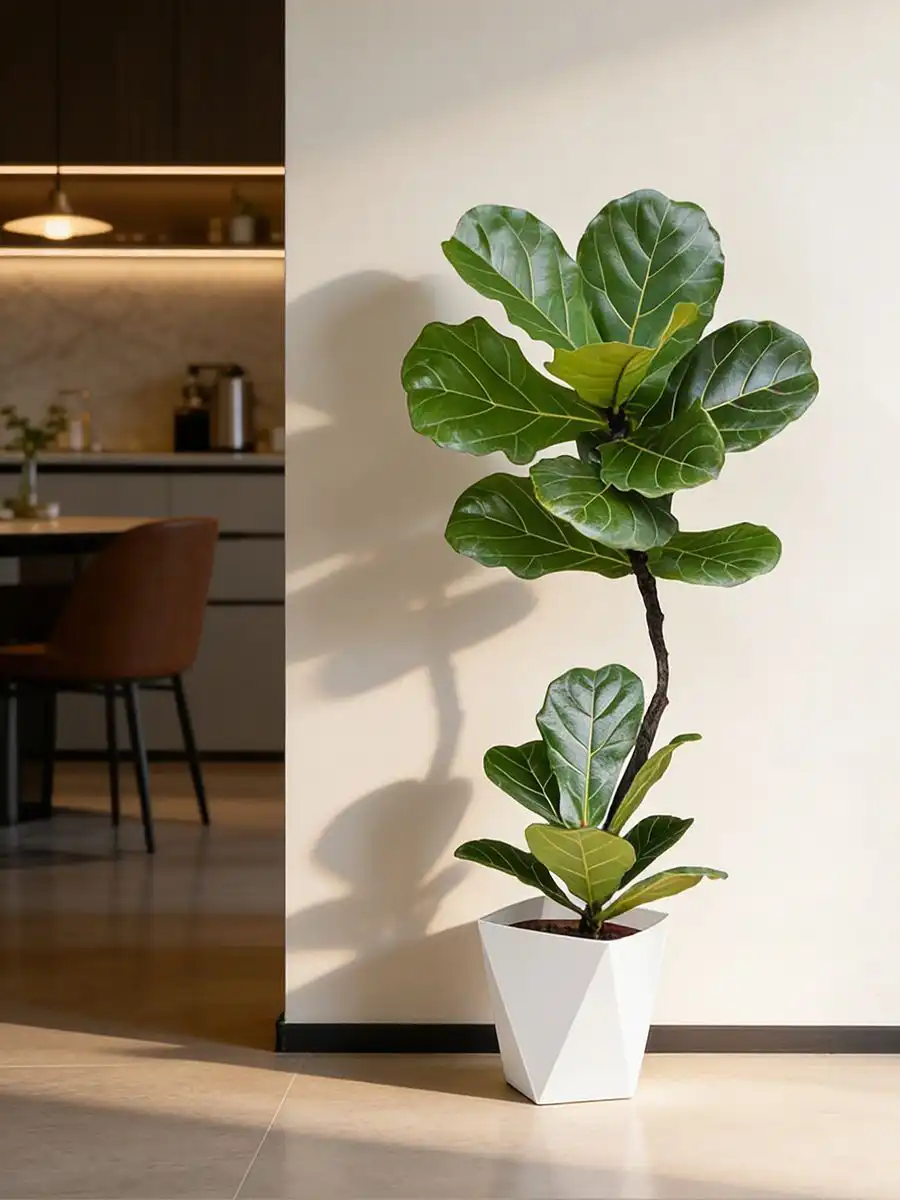

The Plant That Defined a Decade of Interior Design
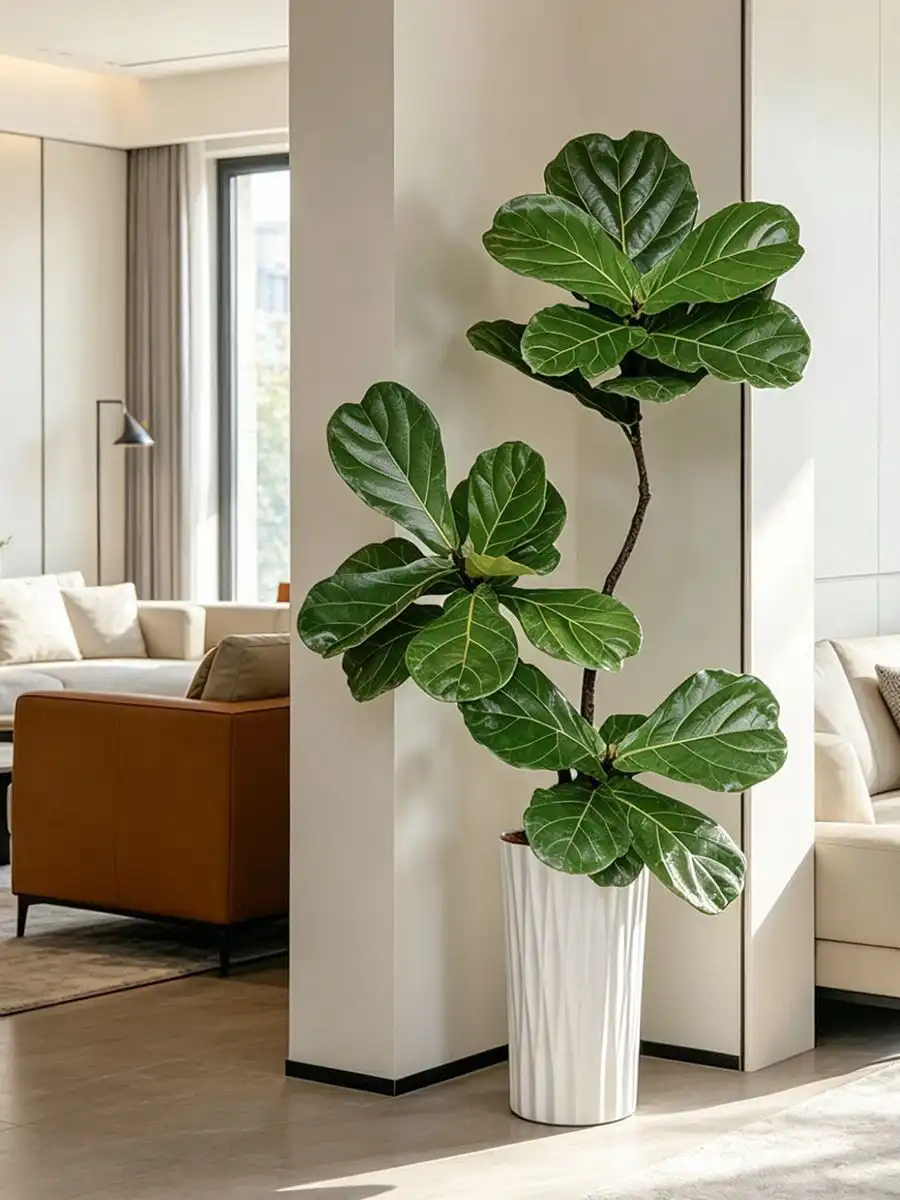
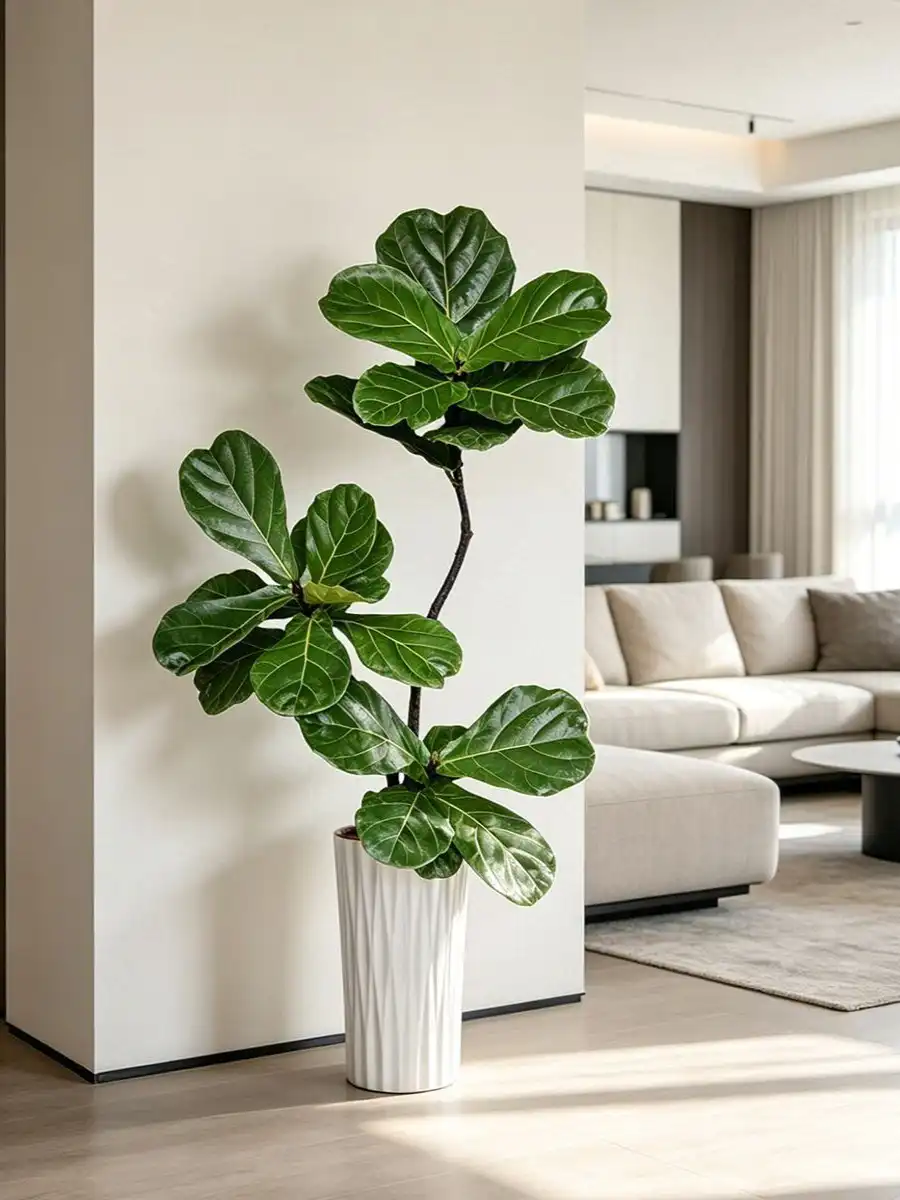
Walk into any stylish hotel lobby, any carefully curated living room, any magazine spread from the past ten years, and there it is. A fiddle leaf fig in the corner, its huge violin-shaped leaves fanned out like a green sculpture, quietly stealing the scene. Ficus lyrata became the unofficial houseplant of the design world not because it is the easiest plant — it is not — but because when you get it right, there is nothing else that looks like it. A healthy, well-placed fiddle leaf fig transforms a room from furnished to finished.
Not a Beginner Plant, But Not Impossible
Let us be honest about what you are signing up for. The fiddle leaf fig has a reputation. It drops leaves when moved. It protests inconsistent watering. It wants bright, indirect light and will let you know — dramatically — when it is not getting it. But the reputation is only half the story. The other half is that thousands of people keep fiddle leaf figs alive and thriving for years by following one simple rule: consistency. Same spot. Same watering rhythm. Same monthly feeding during the growing season. The plant does not need you to be an expert. It needs you to be predictable. If you can do that, it rewards you with the most architectural foliage in the indoor plant world.
Grown With Patience, Shipped With Care
We source our fiddle leaf figs from growers who shape young plants for the classic tree form — a clean single trunk topped with a full canopy of those unmistakable leaves. Each plant is acclimated before shipping and arrives ready to settle into its new home. UC Master Gardeners confirms that fiddle leaf figs are among the most rewarding indoor trees with proper care. Browse our full indoor plant collection for more statement specimens.
Why the fiddle leaf fig Earned Its Fame
Leaves That Stop the Scroll
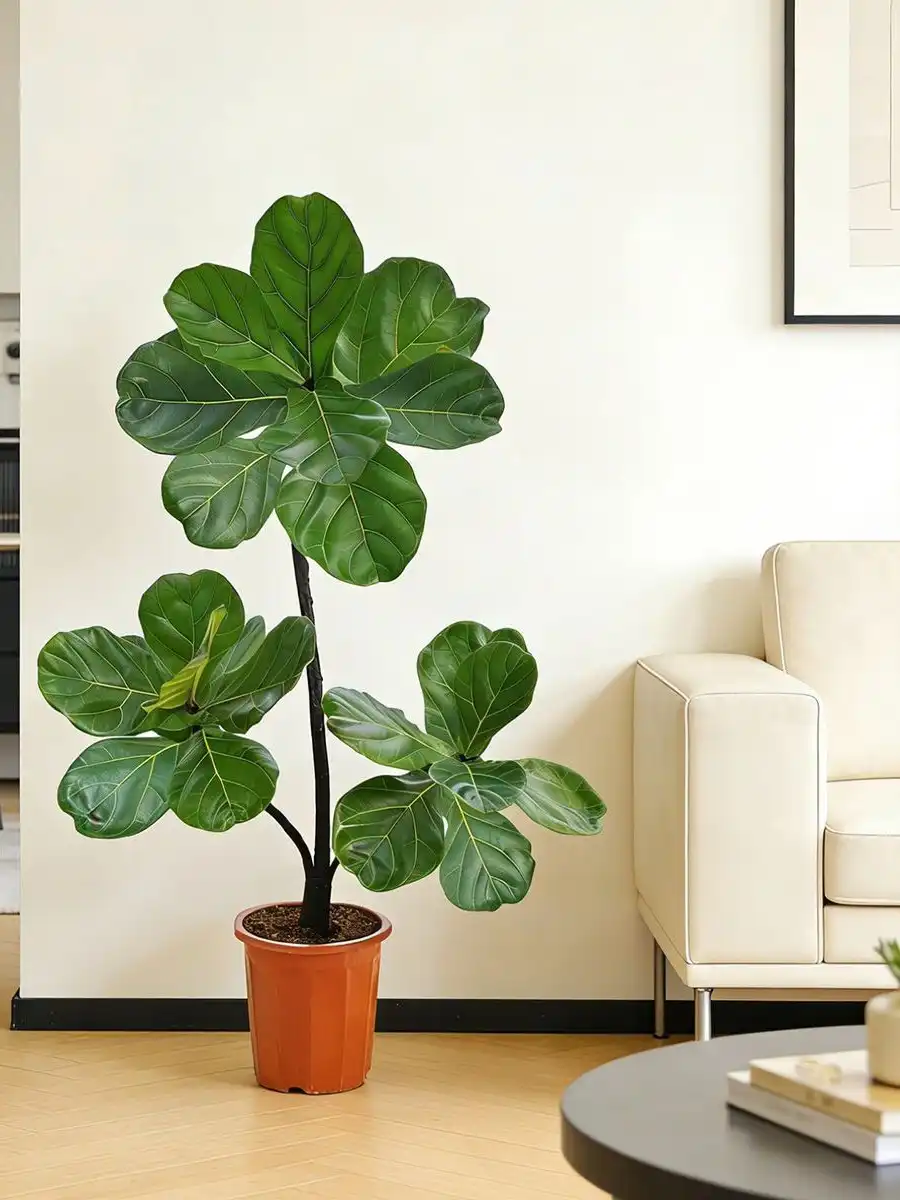
The leaves are the entire point. Each one is shaped like a fiddle — broad at the base, pinched in the middle, flaring out at the top — and can reach 12 to 18 inches long on a mature plant. The surface is glossy and deeply veined, with a leathery texture that catches light beautifully. New leaves emerge tightly furled from the tip of each branch, slowly unfurling over days. A plant in active growth pushes out a new leaf every few weeks during spring and summer. The canopy thickens over time, and a mature specimen in a 4-to-5-foot size has the presence of a piece of furniture.
A Tree That Grows With You
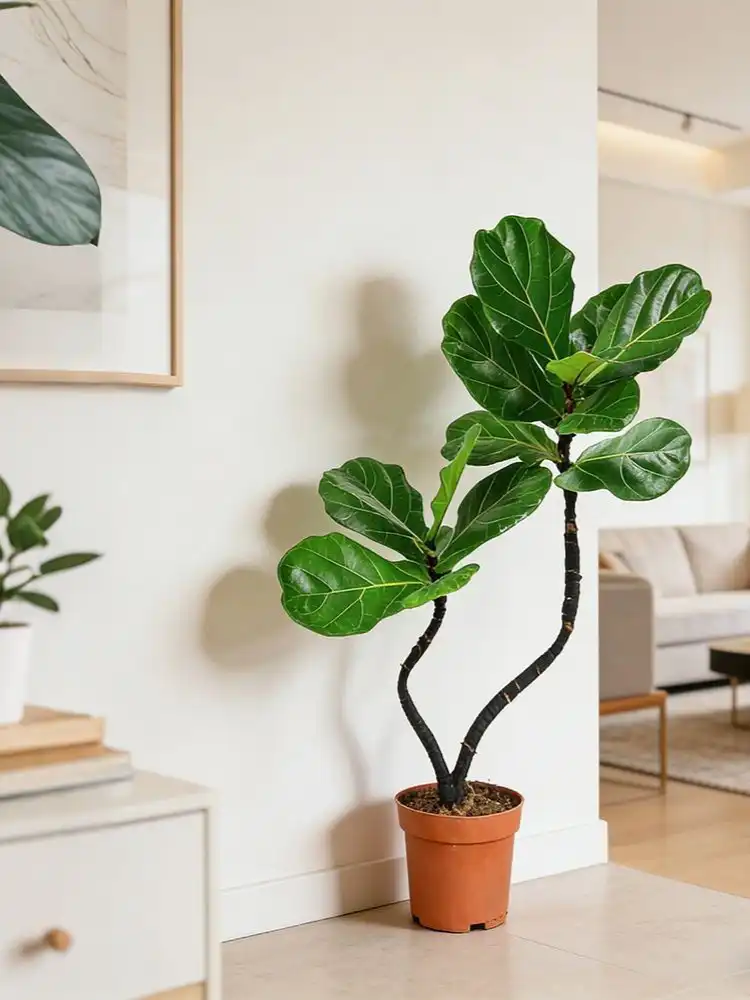
Our fiddle leaf figs are available in three sizes. The 16-to-24-inch size is the starter — perfect for a desk, a console table, or a bright corner that needs a green accent. The 3-foot size is the sweet spot: developed enough to anchor a room, with a visible trunk and a rounded canopy. The 4-to-5-foot size is the statement piece — a genuine indoor tree that transforms a bare wall or an empty corner into the best-looking spot in the house. Each size is a different stage of the same journey. Start small and watch it grow, or go big and let it command the room from day one.
The Secret Is Consistency
Find a spot with bright, indirect light — near an east or south-facing window. Leave the plant there. Do not rotate it daily. Do not move it to the porch for the summer and back inside for winter. A fiddle leaf fig considers stability a basic need. Water it when the top two inches of soil are dry. In summer, that might be once a week. In winter, every two weeks. Feed monthly with a balanced liquid fertilizer during the growing season. Wipe the leaves with a damp cloth when they collect dust. That is the entire routine. Consistency, not complexity, is what keeps this plant alive.
What to Expect When Your Plant Arrives
Settling In
Your fiddle leaf fig arrives in the pot and size you selected. Choose its permanent spot before you unbox it. Bright, indirect light. Away from AC vents, radiators, and drafty doors. Place it there. Water it in if the soil is dry. Then give it a week or two to adjust. Some lower leaves may yellow and drop — this is relocation stress, not failure. The plant is recalibrating to its new light and humidity. Resist the urge to move it, repot it, or fertilize it during this settling period. Let it be still.
Ongoing Care
Once settled, the fiddle leaf fig settles into a rhythm. Water when the top two inches of soil are dry. Feed monthly during spring and summer. Wipe the leaves with a damp cloth every few weeks to keep the large surface area dust-free and photosynthesizing efficiently. If the lower leaves occasionally yellow and drop, this is normal aging on a maturing plant. If multiple leaves drop at once, check for drafts, overwatering, or a recent move. The plant communicates. Listen to it, and it will tell you what it needs. Browse our full indoor plant collection for more living decor.
📖 Care Guide: Learn how to grow and care for your plant with our complete Fiddle-Leaf Fig care. For a darker, wine-toned statement plant that is even more forgiving, see our Burgundy Rubber Tree — it tolerates lower light and handles missed waterings without the drama. Fiddle-Leaf Fig Care Guide: Watering, Light & Pruning for Lush Growth.
📖 Free Care Guide Included
Every plant ships with our complete care guide — watering, pruning, troubleshooting, and seasonal calendar. Read the full guide before your tree arrives →


-300x400.jpg)