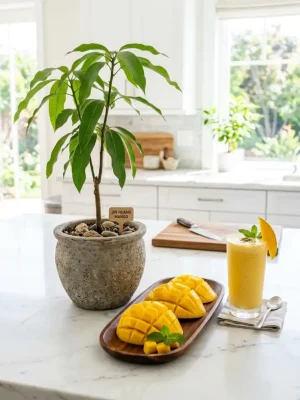
The Osmanthus Tree: What Your Neighbors Will Ask About
There is a small white flower, no bigger than a grain of rice, that produces a fragrance so powerful it can fill an entire city block. This is Osmanthus fragrans—the Sweet Olive, the Tea Olive, the osmanthus tree that blooms across all four seasons. It is not flashy. The flowers are tiny and barely visible against the evergreen foliage. But the scent is something else entirely: a warm, fruity cloud of ripe apricots, jasmine, and honey that drifts through the air for weeks at a time. Unlike most fragrant plants that bloom once and quit, the Four Seasons variety pushes out flowers intermittently all year, with a big show-stopping flush every fall.
We ship these as healthy, rooted saplings—ready to go into the ground or a large container on your patio—browse our outdoor plant collection for more garden-ready varieties. Give them a sunny spot and well-drained soil, and within one to two years, you will walk outside one morning and catch a wave of fragrance you did not plant anything to produce.
Why This Osmanthus Is Different
Most osmanthus varieties bloom once a year—fall, maybe spring if you are lucky. Four Seasons earned its name honestly: it flowers in gentle flushes throughout the year, with the heaviest display in fall when the nights cool down. You are not waiting eleven months for two weeks of fragrance. You are getting it in waves, year-round, from a single self-fertile tree.
The foliage is equally practical: dense, glossy, deep green leaves that hold their color through winter. No bare branches. No seasonal cleanup. Just a tidy, evergreen presence that works as a hedge, a specimen tree, or a container star on the patio. For another evergreen that fills the garden with fragrance year-round, our Lemon Cypress Goldcrest releases a bright citrus scent every time you brush its foliage.
The Honest Truth About Growing Osmanthus
This is not a difficult tree. It does not demand constant attention. However, it does have two non-negotiables.
First: it needs well-drained, slightly acidic soil. If your soil is heavy clay and alkaline, the leaves will turn yellow while the veins stay green—a classic sign of chlorosis. The fix is simple: amend with peat moss and compost at planting time, and feed with an acid-loving plant fertilizer once in spring. Container growers should use an Azalea/Camellia potting mix from day one.
Second: patience. Your sapling will not bloom the week it arrives. It needs one to two years to establish a root system before it directs energy toward flowers. Water consistently, feed lightly, give it sun—and wait. When those first tiny white blossoms open and the fragrance hits you, you will understand why this osmanthus tree has been cultivated in China for over 2,500 years. For another container-friendly fragrant tree, see our Kumquat Tree.
Flowers You Can Eat
The osmanthus flower is not just for smelling. In Chinese cuisine, the dried blossoms are used to perfume tea, flavor desserts, and infuse osmanthus-scented honey. The flowers are edible straight off the tree—add them to green tea for a fragrant upgrade, or steep them in simple syrup for cocktails that taste like a garden in September.
Quick Facts
- Botanical name: Osmanthus fragrans Four Seasons
- Common names: Sweet Olive, Tea Olive, Fragrant Olive
- USDA hardiness: Zones 7 to 10 (evergreen to about 10°F)
- Mature size in ground: 10 to 20 feet tall over many years
- Container size: Easily kept at 3 to 6 feet with occasional pruning
- Sun: Full sun to partial shade (4–6 hours direct sun for best bloom)
- Blooms: Small white flowers, intermittently year-round, peak in fall
- Fragrance: Intense apricot-jasmine-honey scent, detectable from 50+ feet away
- Self-fertile: Yes—only one tree needed for flowers
- Pet safety: Non-toxic to cats, dogs, and humans
- Growth rate: Slow to moderate—a long-term companion
Already reading about osmanthus care? We have a complete Four Seasons Osmanthus care guide covering planting, watering, pruning, and troubleshooting yellow leaves.
📖 Free Care Guide Included
Every plant ships with our complete care guide — watering, pruning, troubleshooting, and seasonal calendar. Read the full guide before your tree arrives →