Guiqi Mango Tree — Grafted, Aromatic Late-Season Mango

$139.00

The most aromatic mango we grow — a heady, perfumed fragrance that fills the room, with intensely sweet, nearly fiber-free flesh. Rare in the U.S., and worth seeking out.

6+ hrs direct, full sun Light Deep, infrequent waterings; well-drained soil, never soggy Water 10–11 USDA Zones 30–60 ft in ground; prune to 10–15 ft in a pot Mature Height
Alive Arrival Healthy on arrival, or we replace it
Free Shipping On orders $99+

Guiqi Mango Tree — the One You Smell Before You See

Guiqi (桂七芒) is the mango that stops people mid-conversation. Its fragrance is so concentrated — a heady, floral, almost perfumed aroma — that you’ll know a ripe one is in the room before you turn the corner. Cut it open and the scent fills the whole kitchen. It’s the single most aromatic mango we grow.

The fruit is a modest half-pound or so, but what it lacks in size it makes up for in everything else: intensely sweet and nearly fiber-free, with flesh that melts on the tongue. Guiqi was selected by researchers in Guangxi, China from a seedling of Neelum — an old Indian variety known for its perfume — and refined into something even more fragrant.

It’s also the rarest mango in this collection. In the U.S., Guiqi is all but impossible to find, which is exactly why we sought it out. If you want a mango that people will ask about — and one they’ll never forget tasting — this is it.

How to Help It Thrive

Guiqi is happiest with six or more hours of direct sun and soil that drains freely. Like all mangoes, it dislikes wet feet — water deeply, then let the top few inches of soil dry out before you water again. In Zones 10–11 it’s right at home in the ground. North of Zone 10, a 20–25 gallon pot and a sunny indoor spot for winter will keep it happy for years.

Quick Facts

  • Botanical name: Mangifera indica ‘Guire 82’
  • Common name: Guiqi mango (桂七芒)
  • Origin: Guangxi, China
  • Parentage: Selected from a Neelum seedling
  • USDA hardiness: Zones 10–11; potted indoors elsewhere
  • Size at delivery: Grafted tree about 2–3 ft tall, in a pot
  • Mature size: 30–60 ft in ground; 10–15 ft pruned in a pot
  • Fruit: About half a pound, intensely aromatic, nearly fiber-free
  • Season: Late
  • Years to fruit: 3–5 years (grafted)
  • Light: Full sun, 6+ hours a day
  • Water: Deep but infrequent; let soil dry between waterings
  • Pet safety: Ripe flesh is safe; pit is a choking hazard, skin/sap can irritate

What to Expect as It Grows

Your Guiqi arrives as a grafted tree about 2–3 ft tall, already past the fragile seedling stage. Grafted trees usually begin bearing in 3–5 years. Give it full sun and steady care, and when it does fruit, you’ll understand why we went out of our way to find it.

Want to see how Guiqi compares to our other mangoes? We wrote a friendly guide to all five varieties, or you can browse the full Fruit Trees collection.

📖 Free Care Guide Included

Every tree ships with our complete care guide — watering calendar, winter protection, and troubleshooting. Read the mango care guide before your tree arrives →

🛡️ And if anything goes wrong, we’ve got you: every plant is backed by our 60-Day Guarantee.
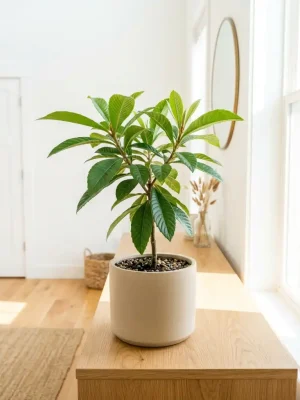
Every Guiqi Mango Tree — Grafted, Aromatic Late-Season Mango we ship comes from our nursery with years of growing experience behind it. Here's what to expect — written by the people who grow them.

📅

Settling In (First 1–4 Weeks)

  • Keep the pot in bright, indirect light for the first 3–5 days, then gradually move it into full sun.
  • Water to keep the soil evenly moist — never soggy — while it adjusts; mango roots hate standing water.
  • Hold off fertilizing for the first month so the roots can settle in without burn.
🌱

Growth & Progress

  • The first new flush of growth usually appears within 3–6 weeks as the tree settles in.
  • Year one is about root establishment — expect modest top growth while the tree builds its foundation.
  • Grafted trees typically begin fruiting in their second to fifth year, depending on variety.
💡

Care Tips From Experienced Growers

  • Give it 6+ hours of direct sun — mangoes are sun lovers and fruit best in full sun.
  • Water deeply but infrequently, letting the top few inches of soil dry out between waterings.
  • Feed with a balanced fruit fertilizer every 6–8 weeks during spring and summer.
  • In Zones 10–11, plant in well-draining soil; elsewhere, grow in a large pot and bring indoors before frost.
⚠️

Things to Watch For

  • Yellowing older leaves usually mean overwatering or poor drainage — let the soil dry more between waterings.
  • Dropping small fruit early in the season is normal (June drop) — the tree is thinning itself.
  • Black, water-soaked leaf spots in humid weather are often anthracnose — improve airflow and treat with copper fungicide.
  • Browning leaf edges and tips often mean salt burn from fertilizer — flush the soil with water.

Why Shop With Us

Alive Arrival Guarantee

Every plant arrives healthy or we replace it free. No hoops, no receipts.

Fast, Careful Shipping

Packed to survive the trip and delivered in days. Free on orders $99+.

Lifetime Plant Support

1-on-1 help from real growers, for the life of your plant.

Frequently Asked Questions

What makes Guiqi different from other mangoes?

Its fragrance and its texture. Guiqi (also called Guire 82) is unusually aromatic u2014 its scent is dominated by a compound called ocimene, which gives it an intense, floral, almost perfume-like aroma. The flesh is also nearly fiber-free, so it eats like custard. It was bred in Guangxi from a seedling of the Indian Neelum mango.

How big is the fruit?

Medium-sized, typically 7 to 12 ounces, sweet and aromatic. It ripens late u2014 mid-to-late summer u2014 so it is a natural companion to early-season varieties if you want to extend your harvest window.

Is it available anywhere else in the US?

Barely. Outside a single specialty seller, Guiqi is essentially not stocked by American nurseries. That scarcity is a big part of its appeal for collectors u2014 but it also means you are getting a genuinely uncommon tree.

How soon will it fruit?

A grafted Guiqi typically begins bearing around its third to fifth year. Full sun, fast-draining soil, and steady springu2013summer feeding are what bring on the first aromatic harvest.

Is a mango tree toxic to pets?

Ripe fruit flesh is safe for cats and dogs. The cautions are the pit (choking/blockage) and the skin and sap, which can irritate skin and mouths. Keep pets away from the tree and the pit.

How do I protect it in winter?

Guiqi is a tropical mango for Zones 10u201311. North of Zone 10, grow it in a pot and bring it indoors before the first frost. Mature trees can briefly tolerate near 25u00b0F, but young trees are tender below 30u00b0F.

Scroll to Top