Tephrocactus Geometricus: The Cactus That Grows in Perfect Spheres
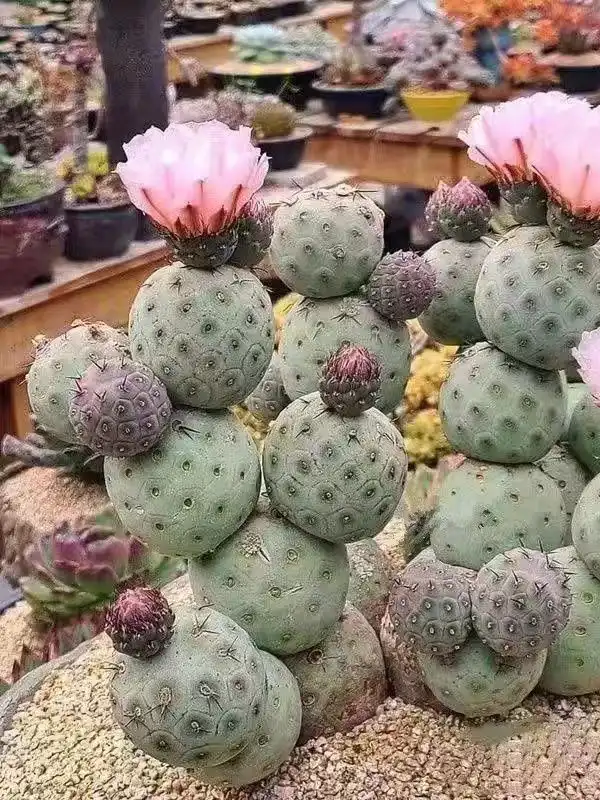
Most cacti are predictable. Columns. Pads. Barrels. Tephrocactus geometricus did not get the memo. This plant grows as a loose stack of near-perfect spheres — each segment a blue-green ball, one to two inches across, with subtle geometric ridges. A mature specimen looks less like a plant and more like a piece of modern sculpture. Each new sphere emerges slowly from the tip of the previous one, swelling over weeks until it matches its siblings. Then the plant pauses. Then it does it again, once or twice a year. It is unhurried, deeply architectural, and the kind of plant that makes people stop and ask what on earth they are looking at.
Painfully Slow, Genuinely Rare
Tephrocactus geometricus is native to a narrow region of Argentina — rocky, arid slopes at high elevation where it endures blazing sun, freezing nights, and months without rain. In cultivation, it is painfully slow. One or two new segments per year is normal. Four in a year is exceptional. Propagation yields just one new plant per detached segment. This is why mature, multi-segmented specimens are genuinely rare in the trade. Slow, however, does not mean difficult. In fact, it is one of the easiest cacti to keep alive — as long as you do not overwater it. Specialist growers confirm that Tephrocactus ranks among the most forgiving plants for sunny spaces.
Do Not Touch the Blue
The epidermis of a healthy Tephrocactus geometricus displays a distinctive blue-green color with a powdery white bloom that acts as natural sunscreen. Do not touch the plant body directly — fingerprints are permanent. The white bloom does not grow back. Handle it by the base or the pot instead. Over time, segments stack into a loose, sculptural tower. No two plants grow the same way — the angle of each new segment shifts unpredictably. The geometry is the entire point. This is a plant you collect with your eyes, not your hands.
A Sculpture That Assembles Itself
A new segment typically appears in spring or summer. It starts as a tiny reddish sphere at the tip of the topmost segment. Over several weeks, it swells to full size and shifts from red to blue-green. Watching this happen — a perfect new ball materializing from nothing — is the reward. This is a different kind of plant appreciation. You are not measuring growth in leaves per week. You are watching a sculpture assemble itself over years. When a mature segment eventually detaches, it becomes a new plant. Root it in dry cactus mix and you just propagated one of the rarest-looking cacti in the world for free.
Thrives on Neglect
This cactus evolved to survive. Blazing sun? No problem. Months without rain? Built for it. Freezing nights at high elevation? Handled. Give it full, direct sun, soil that drains instantly — fifty percent cactus soil plus fifty percent pumice or perlite — and forget to water it for weeks at a time. During the growing season, water every two to three weeks. In winter, when temperatures drop below fifty degrees Fahrenheit, cut back to once a month or less. The plant is dormant and takes up almost no water. A single ill-timed winter watering can cause fatal rot. Overwatering is the single reliable way to fail with this plant. Browse our outdoor plant collection for more sculptural specimens.
Quick Facts
- Botanical name: Tephrocactus geometricus
- Origin: High-elevation rocky slopes of Argentina
- Growth habit: Loose stack of near-perfect spherical segments, 1 to 2 inches each
- Growth rate: 1 to 2 new segments per year — genuinely slow
- Sun: Full, direct sun; south-facing windowsill or outdoor full sun
- Water: Every 2 to 3 weeks in growing season; once monthly in winter dormancy
- Soil: 50% cactus mix + 50% pumice or perlite — drainage is non-negotiable
- USDA hardiness: Zones 9 to 11 outdoors; indoor year-round elsewhere
- Special care: Never touch the plant body — fingerprints on the blue-white bloom are permanent
- Pet safety: Non-toxic; spines are minimal but handle with care
Ready to own a living sculpture that grows one perfect sphere at a time? Read the Care Guide tab below for planting, watering, and propagation. For another collector-grade specimen, browse our plant collection.
📖 Free Care Guide Included
Every plant ships with our complete care guide — watering, pruning, troubleshooting, and seasonal calendar. Read the full guide before your tree arrives →