Aeonium saundersii Pinheads ‘Little Fox’ — Gomera Dwarf Aeonium

$18.99

A rare Gomera dwarf — Aeonium saundersii ‘Pinheads’ (Little Fox) ships as a bare-root 8–10 head cluster (~3 in across). A summer-dormant, pet-safe succulent that grows in fall–spring and rests through summer heat.

Out of stock

Bright indirect to full sun — more light deepens the copper-red edges Light Moderate fall–spring; drastically reduce in summer dormancy Water 9a–11b USDA Zones 6–12 in tall & wide (15–30 cm) Mature Height
Alive Arrival Healthy on arrival, or we replace it
Free Shipping On orders $99+

Pinheads ‘Little Fox’: A Gomera Dwarf Aeonium That Does the Opposite of Every Other Succulent

Most succulents grow in summer and rest in winter. Aeonium saundersii does it backwards. This rare Gomera dwarf — better known by its market names Pinheads and ‘Little Fox’ — is a summer-dormant succulent that wakes up in the cooler months and sleeps through the summer heat. That one fact changes everything about how you water it, and it is the reason so many new owners accidentally kill an otherwise forgiving plant. Get the dormancy rhythm right, and this fuzzy, copper-edged rosette cluster becomes one of the most low-maintenance, pet-safe succulents you can own.

Native to the island of La Gomera in the Canary Islands, Aeonium saundersii evolved as a small, shrubby succulent with velvety green rosettes that flush copper and red at the leaf edges under strong light or drought. Your plant ships as a bare-root cluster of 8–10 heads, roughly 3 in (8 cm) across. It arrives compact and unrooted — exactly how this species is safely traded — and once settled into a gritty, fast-draining mix, each head keeps producing new rosettes season after season.

The One Rule That Keeps It Alive: Respect the Summer Dormancy

From roughly October through April, this is a growing plant — water moderately whenever the soil has dried out, and give it bright light to keep the rosettes tight and colorful. In summer, it goes dormant. The leaves curl inward, the cluster tightens, and it looks like it is struggling — but it is not. Drastically cut back watering during summer heat. Watering on your regular succulent schedule through the dormant months is the #1 cause of root rot in this species. When in doubt, water less in summer and more in the cool season.

Quick Facts

  • Botanical name: Aeonium saundersii
  • Common names: Pinheads, Little Fox, Gomera Dwarf Aeonium
  • Family: Crassulaceae (stonecrop) — same family as the jade plant
  • USDA hardiness: Zones 9a–11b; treat as a houseplant elsewhere
  • Size at delivery: Bare-root cluster of 8–10 heads, about 3 in (8 cm) across
  • Mature size: 6–12 in (15–30 cm) tall and wide
  • Growth habit: Small, shrubby, clustering rosettes; slow grower
  • Light: Bright indirect to full sun — more light deepens the copper-red edges; shield from hot afternoon sun
  • Water: Moderate in fall–spring; drastically reduce or stop in summer dormancy
  • Temperature: 60–75°F ideal; bring indoors before nights drop below 40°F
  • Pet safety: Non-toxic to cats and dogs — the Aeonium genus is not on the ASPCA toxic plant list

Ready for a succulent that breaks all the usual rules? Read the care sections below for the full dormancy calendar, then pair it with a dark-leaved Aeonium for a two-tone “法师” pairing. Browse our full succulent collection for more pet-safe, collector-grade plants.

📖 Free Care Guide Included

Every plant ships with our complete care guide — dormancy calendar, watering schedule, and troubleshooting. Read the full care library before your plant arrives →
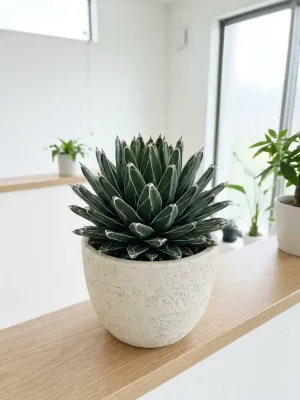
Every Aeonium saundersii Pinheads 'Little Fox' — Gomera Dwarf Aeonium we ship comes from our nursery with years of growing experience behind it. Here's what to expect — written by the people who grow them.

📦

Arrival

  • Arrives as a bare-root cluster of 8–10 heads, about 3 in (8 cm) across.
  • Shipped unrooted, exactly how this summer-dormant species is safely traded.
📅

Settling In (First 1–4 Weeks)

  • Plant into a gritty, fast-draining cactus mix as soon as it arrives.
  • Hold off watering for the first few days to let the roots settle.
🌱

Growth & Progress

  • A slow grower — expect visible new rosettes and stem growth.
  • Most growth happens during the cool season, roughly October through April.
💡

Care Tips From Experienced Growers

  • Water moderately in fall–spring, only when the soil has dried out.
  • Drastically reduce water during summer dormancy.
⚠️

Things to Watch For

  • Root rot from overwatering — the #1 killer.
  • Especially in summer, when the plant is dormant and barely drinking.

Why Shop With Us

Alive Arrival Guarantee

Every plant arrives healthy or we replace it free. No hoops, no receipts.

Fast, Careful Shipping

Packed to survive the trip and delivered in days. Free on orders $99+.

Lifetime Plant Support

1-on-1 help from real growers, for the life of your plant.

Frequently Asked Questions

What should I do when my bare-root Aeonium arrives?

Open the package immediately and plant the cluster into a gritty, fast-draining cactus mix. Hold off watering for the first few days so the roots can settle, then water lightly. Introduce it to brighter light gradually over a week or two to avoid sunburn on unacclimated leaves.

Is Aeonium saundersii safe for cats and dogs?

Yes. Aeonium saundersii (Pinheads / Little Fox) is non-toxic to cats, dogs, and other pets. As a member of the Aeonium genus, it contains no harmful alkaloids or cardiac glycosides, and it is recognized as a pet-friendly succulent by plant authorities and veterinary sites such as ASPCA and PetMD. While it is not poisonous, keep two things in mind if a pet nibbles it: first, the fibrous plant material can cause mild stomach upset; second, rinse the leaves if you have applied fertilizer or pesticide, since those residues are the real risk. For extra safety, place the plant on a high shelf, a hanging planter, or a windowsill your pet cannot reach.

Why are the leaves curling and closing up in summer?

That is summer dormancy, and it is normal and healthy. Aeoniums are winter growers that go dormant in summer heat. The leaves curl inward and the cluster tightens to conserve water. Do not try to fix it with more water; that is the fastest way to cause root rot. Simply keep it dry and in bright indirect light until the cool season returns.

How often should I water it?

It depends on the season. From roughly October through April (the growing season), water moderately whenever the soil has dried out. In summer, drastically reduce or stop watering — the plant is dormant and barely drinking. This reverse rhythm is the single most important thing to get right with any Aeonium.

Will the whole plant die after it flowers?

No. Like all Aeoniums, each rosette is monocarpic — the flowering head dies after it blooms — but the plant itself lives on through its offsets and side shoots. You will simply get new heads to replace the one that flowered.

Scroll to Top