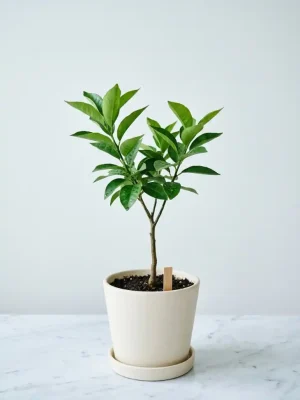
Tainong No.1 Mango Tree — Grafted, Dwarf Early-Season Mango

$125.00

Taiwan’s beloved dwarf mango — compact enough for a patio, sweet enough to be famous. Early-season fruit of 5 to 10 ounces each on a naturally small tree that finally makes mangoes fit small spaces.

6+ hrs direct, full sun Light Deep, infrequent waterings; well-drained soil, never soggy Water 10–11 USDA Zones 30–60 ft in ground; prune to 10–15 ft in a pot Mature Height
Alive Arrival Healthy on arrival, or we replace it
Free Shipping On orders $99+

Tainong No.1 Mango Tree — the Little Taiwanese Tree with a Big Reputation

Tainong No.1 is the mango that made us rethink what a “small” tree can do. Bred at Taiwan’s Fengshan research station and named in 1985, it’s a cross of Haden and Irwin — two household names in the mango world — and it carries the best of both: Irwin’s sweetness and Haden’s character, in a tree that stays compact and easy to keep.

That compact habit is the whole point. Tainong No.1 is a natural dwarf, with a round, tidy crown and short branches, so it fits honestly on a patio or a sunny balcony where a full-size mango never would. And because it’s early-season, it’s often the first mango to ripen — small, sweet fruit of about 5 to 10 ounces each, with a flavor that punches well above its size.

In Taiwan this is a beloved classic — the “little mango” everyone knows. Here, it’s still a quiet rarity. If you wanted mangoes but thought you didn’t have the room, this is the tree that changes your mind.

How to Help It Thrive

Tainong No.1 is happiest with six or more hours of direct sun and soil that drains freely. Like all mangoes, it dislikes wet feet — water deeply, then let the top few inches of soil dry out before you water again. In Zones 10–11 it’s right at home in the ground. North of Zone 10, a 20–25 gallon pot and a sunny indoor spot for winter will keep it happy for years.

Quick Facts

  • Botanical name: Mangifera indica ‘Tainong No.1’
  • Common name: Tainong No.1 mango (台农一号)
  • Origin: Fengshan, Taiwan — named in 1985
  • Parentage: Haden × Irwin
  • USDA hardiness: Zones 10–11; potted indoors elsewhere
  • Size at delivery: Grafted tree about 2–3 ft tall, in a pot
  • Mature size: Compact dwarf — typically 6–10 ft, easy to keep smaller in a pot
  • Fruit: Small–medium, 5–10 oz, sweet and aromatic
  • Season: Early
  • Years to fruit: 3 years (grafted), heavier by year 5
  • Light: Full sun, 6+ hours a day
  • Water: Deep but infrequent; let soil dry between waterings
  • Pet safety: Ripe flesh is safe; pit is a choking hazard, skin/sap can irritate

What to Expect as It Grows

Your Tainong No.1 arrives as a grafted tree about 2–3 ft tall, already past the fragile seedling stage. Grafted trees usually begin bearing around year 3, with harvests getting heavier by year 5. Because it’s a natural dwarf, it stays manageable — prune it lightly and it will happily live its whole life in a large pot.

Want to see how Tainong No.1 compares to our other mangoes? We wrote a friendly guide to all five varieties, or you can browse the full Fruit Trees collection.

📖 Free Care Guide Included

Every tree ships with our complete care guide — watering calendar, winter protection, and troubleshooting. Read the mango care guide before your tree arrives →

🛡️ And if anything goes wrong, we’ve got you: every plant is backed by our 60-Day Guarantee.
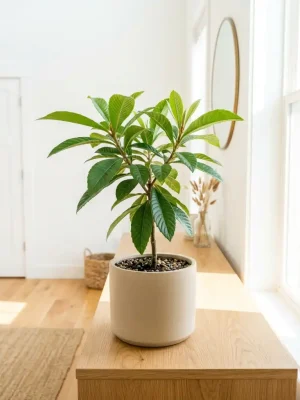
Every Tainong No.1 Mango Tree — Grafted, Dwarf Early-Season Mango we ship comes from our nursery with years of growing experience behind it. Here's what to expect — written by the people who grow them.

📅

Settling In (First 1–4 Weeks)

  • Keep the pot in bright, indirect light for the first 3–5 days, then gradually move it into full sun.
  • Water to keep the soil evenly moist — never soggy — while it adjusts; mango roots hate standing water.
  • Hold off fertilizing for the first month so the roots can settle in without burn.
🌱

Growth & Progress

  • The first new flush of growth usually appears within 3–6 weeks as the tree settles in.
  • Year one is about root establishment — expect modest top growth while the tree builds its foundation.
  • Grafted trees typically begin fruiting in their second to fifth year, depending on variety.
💡

Care Tips From Experienced Growers

  • Give it 6+ hours of direct sun — mangoes are sun lovers and fruit best in full sun.
  • Water deeply but infrequently, letting the top few inches of soil dry out between waterings.
  • Feed with a balanced fruit fertilizer every 6–8 weeks during spring and summer.
  • In Zones 10–11, plant in well-draining soil; elsewhere, grow in a large pot and bring indoors before frost.
⚠️

Things to Watch For

  • Yellowing older leaves usually mean overwatering or poor drainage — let the soil dry more between waterings.
  • Dropping small fruit early in the season is normal (June drop) — the tree is thinning itself.
  • Black, water-soaked leaf spots in humid weather are often anthracnose — improve airflow and treat with copper fungicide.
  • Browning leaf edges and tips often mean salt burn from fertilizer — flush the soil with water.

Why Shop With Us

Alive Arrival Guarantee

Every plant arrives healthy or we replace it free. No hoops, no receipts.

Fast, Careful Shipping

Packed to survive the trip and delivered in days. Free on orders $99+.

Lifetime Plant Support

1-on-1 help from real growers, for the life of your plant.

Frequently Asked Questions

What makes Tainong No.1 different from other mangoes?

Its size and its season. It is a genuine dwarf with a short, rounded, tightly-branching crown u2014 one of the few mangoes that stays small enough to keep happily in a pot. It is also early-season, so it fruits before the main mango rush. Parentage is Haden u00d7 Irwin, bred in Taiwan and named in 1985.

How big does the fruit get?

Smaller than a supermarket mango u2014 typically 5 to 10 ounces. What it gives up in size it returns in sweetness and in how early and reliably it fruits. The small fruit also makes it a good choice for smaller households.

Is it really good for growing in a pot?

Yes u2014 this is the strongest reason to choose it. Its dwarf habit means it stays naturally compact (roughly 6u201310 ft in a large pot), so it is the easiest of the mangoes to keep on a patio or balcony and move indoors for winter. It still wants full sun and fast-draining soil.

How soon will it bear fruit?

A grafted Tainong No.1 typically begins bearing around its third year. Its early-season habit means you will not have to wait until late summer for the first harvest.

Is a mango tree toxic to pets?

Ripe fruit flesh is safe for cats and dogs. The cautions are the pit (choking/blockage) and the skin and sap, which can irritate skin and mouths. Keep pets away from the tree and especially the pit.

What hardiness zone does it need?

It is a tropical mango for Zones 10u201311. North of Zone 10, grow it in a pot and bring it indoors before the first frost. Mature trees can briefly tolerate near 25u00b0F, but young trees and new growth are tender below 30u00b0F.

Scroll to Top