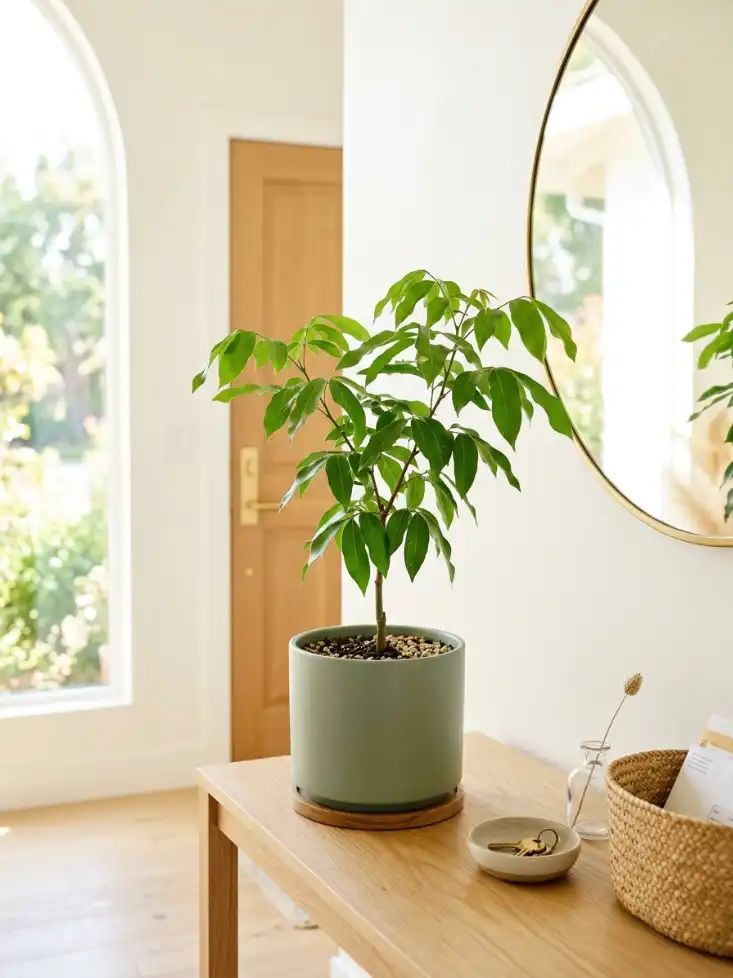

The Lychee Tree: Once Reserved for Emperors, Now in Your Backyard
In the eighth century, Emperor Xuanzong of Tang Dynasty China had a problem. His favorite consort, Yang Guifei, loved fresh lychees. The fruit grows in the subtropical south, ripens for only a few weeks each summer, and spoils within three days of picking — a thousand years before refrigeration. The capital was over six hundred miles north. The emperor’s solution: a relay of horseback couriers racing day and night, each rider handing the precious cargo to the next, so his consort could taste a fresh lychee before it spoiled. All of this for a fruit. A lychee tree in your backyard will not require a relay of couriers. But it will require patience — three to five years to first fruit, a cool dry winter to trigger flowering, and well-drained slightly acidic soil. What it gives in return is the same fruit that launched a thousand horses: rough pink-red shell, peel it back, translucent white flesh tasting of rose petals and muscat grape, crisp and impossibly fragrant. A tree-ripened lychee bears no resemblance to the sad, canned things in syrup. This is a commitment. It is worth it.
The Winter Secret Most Growers Miss
A lychee tree needs a cool, relatively dry winter to initiate flowering — about four to six weeks with daytime temperatures below sixty degrees Fahrenheit and nights in the forties or fifties. Without this seasonal signal, the tree grows beautifully but never blooms. This is the single most common reason for lychee failure in consistently warm tropical climates: the tree is evergreen, handsome, and completely barren. For growers in zones 9 through 11 with cool winters, the tree thrives outdoors. For container growers in colder zones, the winter rest happens naturally near a cool, bright window — move the tree indoors before frost, keep it in a room that stays cool through winter, and bring it back outside after the last spring frost. Get the winter chill right, and the tree rewards you. Skip it, and you will have a very attractive evergreen shrub that never produces a single fruit. University of Florida IFAS Extension covers lychee cultivation and flowering requirements in detail.
What a Ripe Lychee Actually Tastes Like
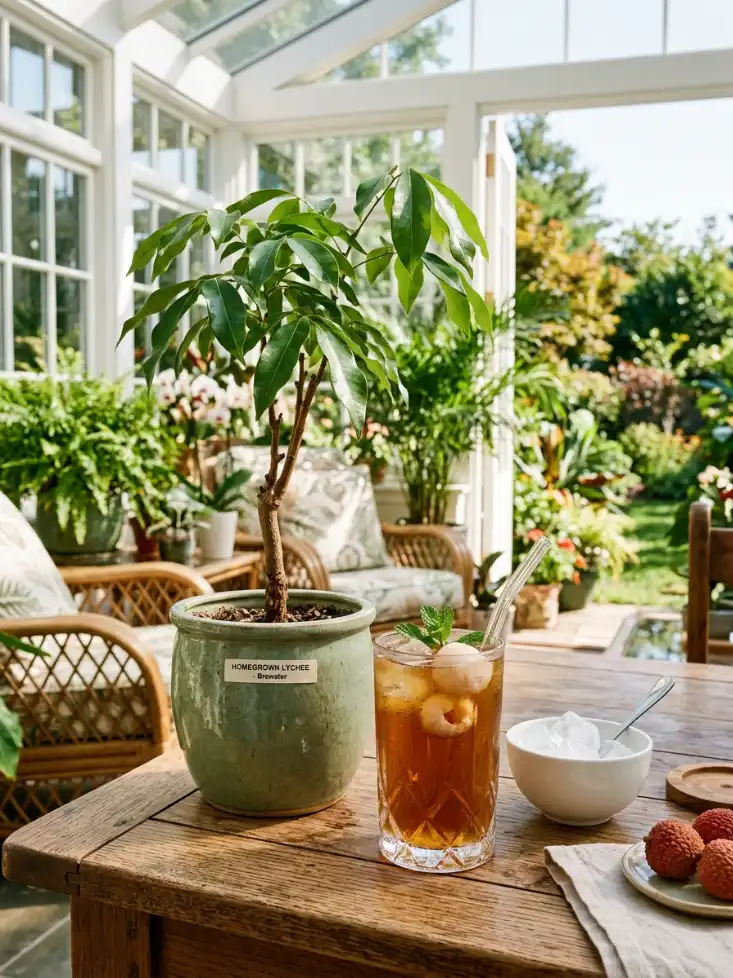
If you have only eaten canned lychees — pale, soft, suspended in syrup — you have never actually tasted lychee. A fresh, tree-ripened fruit is something else entirely. The shell is rough, thin, and pink-red, peeling away with a pinch to reveal a perfect sphere of translucent white flesh. The texture is crisp and juicy, like a peeled grape but firmer. The flavor is intensely floral — rose, grape, a hint of musk — with a clean, sweet finish that is nothing like the cloying syrup of the canned version. The single large, glossy brown seed separates cleanly. A mature lychee tree produces 100 to 200 pounds of fruit each summer, ripening over a two-to-three-week window. What you cannot eat fresh freezes beautifully — peeled and seeded lychees keep for months in the freezer and transform smoothies and desserts with a floral sweetness that tastes like summer in January. Browse our full fruit tree collection for more tropical treasures.
A Tree as Beautiful as Its Fruit
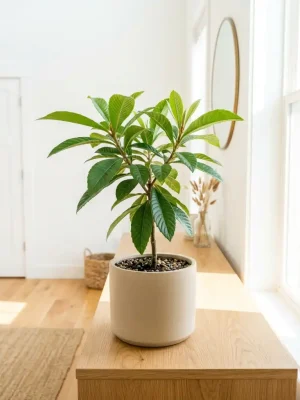
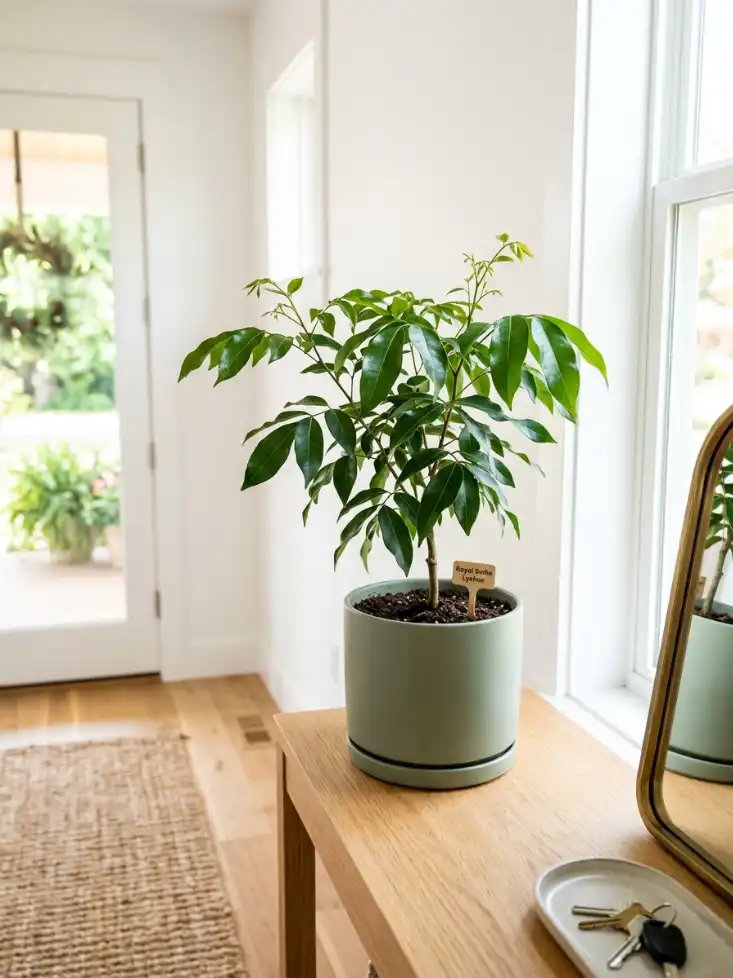
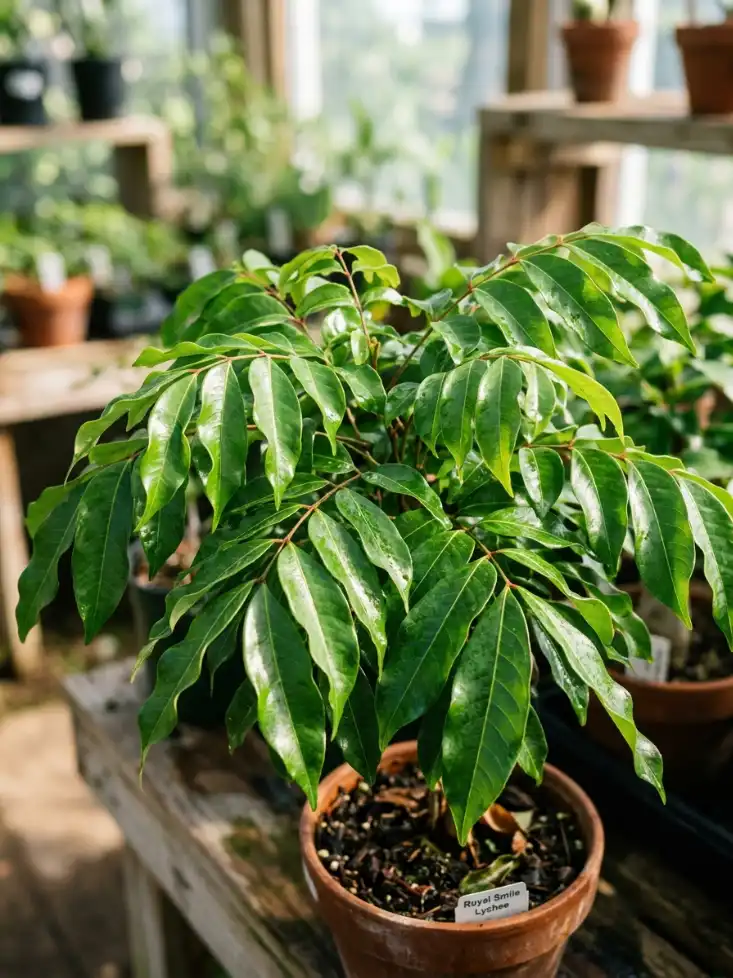
The lychee is a dense, rounded evergreen with glossy dark green compound leaves that emerge coppery-red before hardening to deep green — a color display that repeats with every flush of new growth. In spring, the tree covers itself in long panicles of tiny greenish-white to yellow flowers that hum with bees. The fruit develops through early summer and ripens in midsummer. After harvest, the tree rests, requiring little beyond water and an annual feeding. It is not a demanding tree once its basic requirements are met: well-drained, slightly acidic soil, full sun, and that critical winter chill period. In a large container — twenty-four inches or wider — it stays a manageable six to eight feet and fruits well with proper care. For another tropical fruit that thrives in containers with winter protection, see our Longan Tree — lychee’s easier, more cold-tolerant cousin.
Quick Facts
- Botanical name: Litchi chinensis
- Common names: Lychee, litchi, leechee
- USDA hardiness: Zones 9 to 11 outdoors; container-grown everywhere else with winter protection
- Mature size: 15 to 30 feet in ground; 6 to 8 feet in a container
- Sun: Full sun, 6+ hours daily
- Winter requirement: 4 to 6 weeks below 60°F to trigger flowering — critical for fruit set
- Pollination: Self-fertile — a single tree produces fruit; bees improve yields
- Years to first fruit: 3 to 5 years from a grafted sapling
- Harvest: Midsummer; fruit ripens over 2 to 3 weeks
- Yield: 100 to 200 pounds annually from a mature tree
- Flavor: Intensely floral — rose, grape, musk — with crisp texture; nothing like canned lychee
- Pet safety: Fruit flesh is safe; seed is inedible and a choking hazard
Ready to grow the fruit that once required a relay of imperial couriers? Read the Care Guide tab below for planting, winter chill management, and harvest instructions. For a tropical fruit tree with similar appeal but less demanding requirements, browse our fruit tree collection.
📖 Free Care Guide Included
Every plant ships with our complete care guide — watering, pruning, troubleshooting, and seasonal calendar. Read the full guide before your tree arrives →
New to fruit tree care? Read our complete Fruit Tree Care Guide — soil, watering, pruning, and organic pest control for every backyard orchard.